Pune to Varanasi: Journey Guide for Maharashtrian Travellers and Pilgrims
From Pune's energy to Kashi's eternity — Maharashtra's oldest pilgrimage route to Kashi Vishwanath
Pune to Varanasi is a journey that Maharashtrian Hindus have made for centuries. The Kashi Vishwanath Jyotirlinga holds special significance in the Maharashtrian pilgrimage tradition — the Peshwa rulers of the Maratha Empire were among Kashi's great patrons, and Ahilya Ghat on the Varanasi waterfront was built by Maratha queen Ahilyabai Holkar. For many Pune families, a Kashi Yatra remains a significant life milestone. The journey today is most practically made by direct flight from Pune's international airport in approximately 2.5 hours, or by overnight train from Pune Junction. This guide covers both options and how to plan your Varanasi visit from Pune.
By Flight: Pune to Varanasi (~2.5 Hours)
Chhatrapati Shivaji Maharaj International Airport, Pune (IATA: PNQ), has direct flights to Varanasi's Lal Bahadur Shastri Airport (VNS). Flight time on a direct service is approximately 2.5 hours. IndiGo and Air India have operated on this route; check current schedules and availability as direct flight frequency changes seasonally.
For travellers from Pune wanting to maximise time in Varanasi, flying is the clear first choice. Total door-to-door time by air — Pune airport to Varanasi ghats — is typically 4.5–6 hours, compared to 27+ hours by train.
If no direct flight suits your dates, a connection via Delhi (PNQ–DEL approximately 1.5 hours + DEL–VNS 1 hour) is the most reliable alternative. Delhi–Varanasi has multiple daily flights from most carriers. A Mumbai (BOM) connection is also feasible.
Book 4–6 weeks ahead for October–March peak season from Pune.
By Train: Pune to Varanasi (~26–28 Hours)
Pune Junction (station code: PUNE) is the main railway station in Pune. Several long-distance trains connect Pune with Varanasi Junction (BSB). The journey takes approximately 26–30 hours depending on the specific train and its routing.
The train from Pune passes through a dramatic sequence of landscapes: the initial climb through the Western Ghats, the Deccan plateau, the Vindhya ranges, and finally the broad Indo-Gangetic plain as the train approaches Varanasi. For those who value the journey itself, this is one of the most varied rail routes in India.
For a journey of this distance, AC 2-Tier (2A) or AC 3-Tier (3A) is strongly recommended. Sleeper class is feasible for experienced rail travellers but a full 27+ hours requires preparation.
Verify the terminus of your specific train on IRCTC when booking: some trains terminate at Pt. Deen Dayal Upadhyaya Junction (DDU, 18 km from Varanasi city) rather than Varanasi Junction (BSB). An auto-rickshaw from DDU to Varanasi city takes approximately 40 minutes.
Book trains through IRCTC (irctc.co.in) at least 4–6 weeks ahead for October–March travel.
Maharashtra's Kashi Pilgrimage Tradition
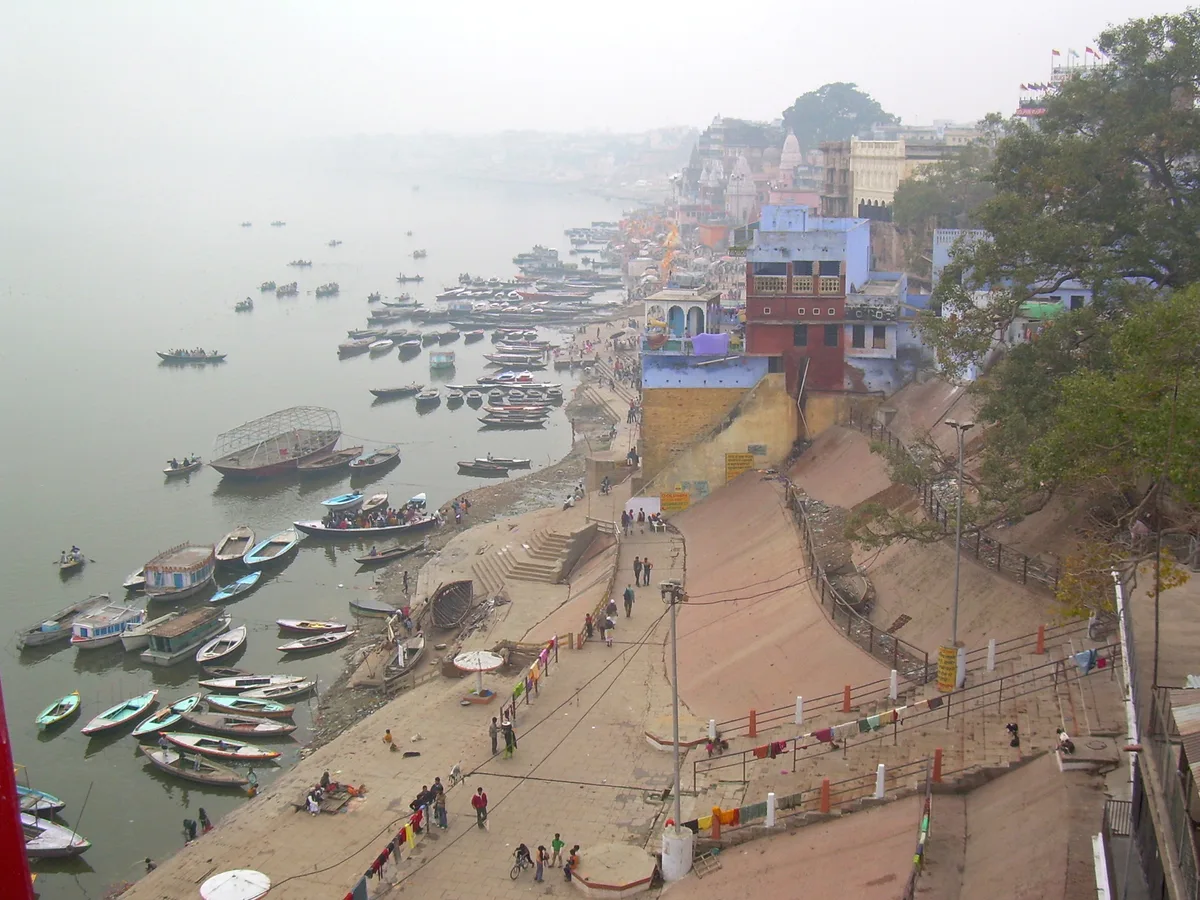
Maharashtra has one of the historically deepest connections to Kashi of any Indian state. The Peshwa rulers of the Maratha Empire were significant patrons of the Kashi temples, and Ahilya Ghat (Ahilyabai Ghat) on the Varanasi waterfront was constructed by the Maratha queen Ahilyabai Holkar of Indore — one of the most beautiful and historic ghats on the river.
For Maharashtra's Brahmin communities, the Kashi Yatra — a dedicated pilgrimage journey to the Kashi Vishwanath Jyotirlinga and a ritual bath in the Ganga — has historically been one of the most meritorious religious acts of a devout life. The concept of making the Kashi Yatra once in a lifetime is embedded in many families' religious practice.
The Varanasi ghats have an established Maharashtrian presence — Marathi is understood in several areas of the old city, particularly around the Maharashtra Ghat. Maharashtrian-style prasad and food can be found in the lanes near the Maharashtra Ghat and the Shivala Ghat area.
For visitors from Pune making a family Kashi Yatra in this tradition, Spirit of Kashi can structure the pilgrimage around the priorities of the Maharashtrian circuit: Kashi Vishwanath darshan, Ganga Snan (ritual bathing), Ganga Aarti, the Annapurna Temple, and the Kal Bhairav Temple.
Planning Your Varanasi Visit from Pune
With a 2.5-hour direct flight from Pune, a 3–5 day Varanasi visit is highly practical: fly out Thursday morning, arrive Varanasi by midday, spend 3 full days, fly back Sunday evening or Monday.
For a first Varanasi visit from Pune: the 3-day structure covers the essential experiences — Ganga Aarti at Dashashwamedh Ghat, sunrise boat ride on the Ganga, Kashi Vishwanath darshan, old city walk, and Sarnath (the Buddhist heritage site 11 km from the city centre).
For Maharashtrian pilgrims making a Kashi Yatra: the traditional circuit includes Ganga Snan (bathing ritual at the Ganga), Kashi Vishwanath darshan (with Abhishek puja if arranging ritual worship), Ganga Aarti, Annapurna Temple, and the Kal Bhairav Temple. Allow a minimum of 2 dedicated full days for the complete temple circuit at a devotional pace.
Pre-book Varanasi accommodation — ghat-area guesthouses and hotels in the Assi Ghat area fill quickly during October–March peak season.
Frequently Asked Questions
Is there a direct flight from Pune to Varanasi?▼
Direct flights between Pune (PNQ) and Varanasi (VNS) are available on some carriers and days — check IndiGo and Air India for current availability, as frequency changes seasonally. If no suitable direct option is available, connecting via Delhi is the most efficient alternative (Delhi–Varanasi is a 1-hour flight with multiple daily departures from most carriers).
How long should I plan for a Varanasi trip from Pune?▼
Three full days in Varanasi is the recommended minimum for a first visit — the sunrise boat ride, Kashi Vishwanath darshan, Sarnath, and the Ganga Aarti all fit into 3 days at a reasonable pace. For a dedicated Maharashtrian Kashi Yatra pilgrimage with the complete temple circuit, allow 4–5 days. Many Pune families extend to Prayagraj (Triveni Sangam, 2 hours by train from Varanasi) as part of the same trip.