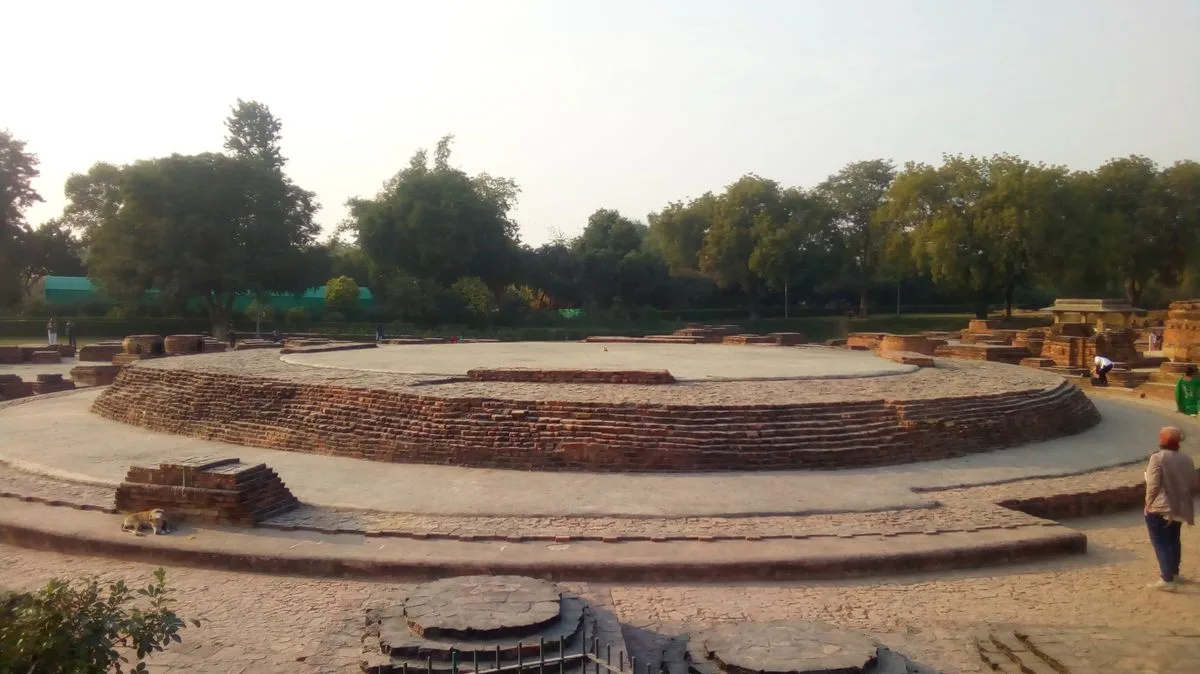
Sarnath
Where the Buddha turned the Wheel of Dharma — 12 km from Varanasi
Sarnath is one of the four most sacred sites in the Buddhist world. After attaining enlightenment at Bodhgaya, the young Siddhartha Gautama — now the Buddha — travelled to Isipatana (the name for Sarnath in Pali) in the deer park outside Varanasi, where he gave his first sermon to five ascetics. This event — the Dharmachakra Pravartana, the turning of the wheel of dharma — is considered the moment Buddhism began.
Sarnath is 12 kilometres north of Varanasi city centre and is typically visited as a half-day trip from Varanasi, usually in the morning before the afternoon heat. It pairs naturally with the Varanasi 3-day itinerary on the second day. For practical transport and timing logistics, see the Sarnath day trip guide.
History of the Site
Archaeological evidence at Sarnath indicates Buddhist activity from as early as the 3rd century BCE — Emperor Ashoka visited in approximately 250 BCE, erected his famous pillar (the lion capital of which is now India's national symbol), and built several stupas. The site flourished through the Gupta period (4th–6th centuries CE) when the great Dhamek Stupa was constructed and Sarnath became a major Buddhist learning centre rivalling Nalanda.
The site was devastated in 1194 CE by the Afghan general Qutb al-Din Aibak's forces, who systematically demolished the monasteries. Sarnath was abandoned and forgotten until 1798–1800, when British surveyors began excavations and identified the site's significance. Systematic archaeological excavation since the 19th century has revealed the full extent of the ancient city.
What to See at Sarnath
Dhamek Stupa
The 6th-century stone stupa marking the exact spot of the Buddha's first sermon. 43 metres high, with intricate geometric stone carvings.
Ashoka Pillar (Stambha)
Emperor Ashoka's 3rd-century BCE pillar — its lion capital is the national emblem of India. The original capital is in the Sarnath Museum.
Sarnath Museum
One of India's finest archaeological museums — houses the original Ashoka Lion Capital, the Wheel of Dharma, and Gupta-period Buddha sculptures.
Deer Park (Rishipatana)
The sacred grove where the Buddha taught — still home to spotted deer. The Mulagandha Kuti Vihara (1931 Buddhist monastery) adjoins the park.
Chaukhandi Stupa
A ruined stupa marking the spot where the Buddha first met his five disciples — topped with a Mughal-era octagonal tower added in 1588.
International Monasteries
Sarnath hosts monasteries and temples from Thailand, Japan, Tibet, China, Korea, and Sri Lanka — a living international Buddhist community.
Visiting Information
- Distance from Varanasi
- 12 km north of Varanasi city centre; 30–45 minutes by auto-rickshaw or taxi
- Archaeological Site Hours
- Sunrise to sunset daily (the ASI-protected ruins). Museum: 9 AM–5 PM, closed Fridays
- Entry
- ASI ticketed site; museum has separate ticket. See current ASI rates
- How to Reach
- Auto-rickshaw from Godaulia (~₹200–400 return); taxi via Spirit of Kashi; shared tempos from Godaulia
- Time Required
- 2–3 hours for ruins + museum; allow extra time for monasteries
- Combined Visit
- Best combined with Varanasi Day 2 morning; pair with Kal Bhairav or Vishwanath afternoon
Frequently Asked Questions
Is Sarnath worth visiting if I'm not Buddhist?▼
Yes — Sarnath is one of India's most significant archaeological sites regardless of religious interest. The Sarnath Museum houses some of the finest ancient Indian sculpture in existence, including the original Ashoka Lion Capital (the origin of India's national emblem). The landscape of the ruins is peaceful and historically extraordinary.
Can Sarnath and Varanasi be visited in one day?▼
Yes, easily. Most visitors allocate morning in Varanasi (sunrise boat ride, Kashi Vishwanath), then travel to Sarnath for 2–3 hours in the mid-morning to afternoon, then return to Varanasi for the Ganga Aarti in the evening. Spirit of Kashi coordinates this full-day circuit.
Visit Sarnath with Spirit of Kashi
We arrange Sarnath as a standalone trip or as part of a full Varanasi day tour — with a guide who can explain the archaeological and Buddhist context of the site.