Varanasi 3-Day Itinerary: The Complete First-Visit Plan
Three days to experience the spiritual, cultural, and culinary heart of Kashi
Three days is the recommended minimum for a genuine first experience of Varanasi. It allows time to see the ghats at dawn, stand inside Kashi Vishwanath Temple, visit Sarnath, walk the old city lanes, explore the southern temple circuit, eat your way through Varanasi's food culture, and sit at the river long enough for the city's extraordinary quality to settle in. This plan is designed for first-time visitors who want a complete experience — not a checklist, but a real encounter with Kashi.
Day 1: Arrival, First Ghats, and Evening Ganga Aarti
Arrive in Varanasi in the early afternoon — this gives you a natural, unhurried first evening rather than arriving at night.
After check-in, take a short walk to the nearest ghat. Not to see anything specific — the purpose of this first walk is acclimatisation. Varanasi operates at a sensory intensity that takes time to settle into: the sounds of the ghats (bells, chanting, boat oars, the river), the smell of incense and marigold, the visual density of a living city pressed against a sacred river. Your first 45 minutes at the ghats should be spent sitting, watching, and adjusting.
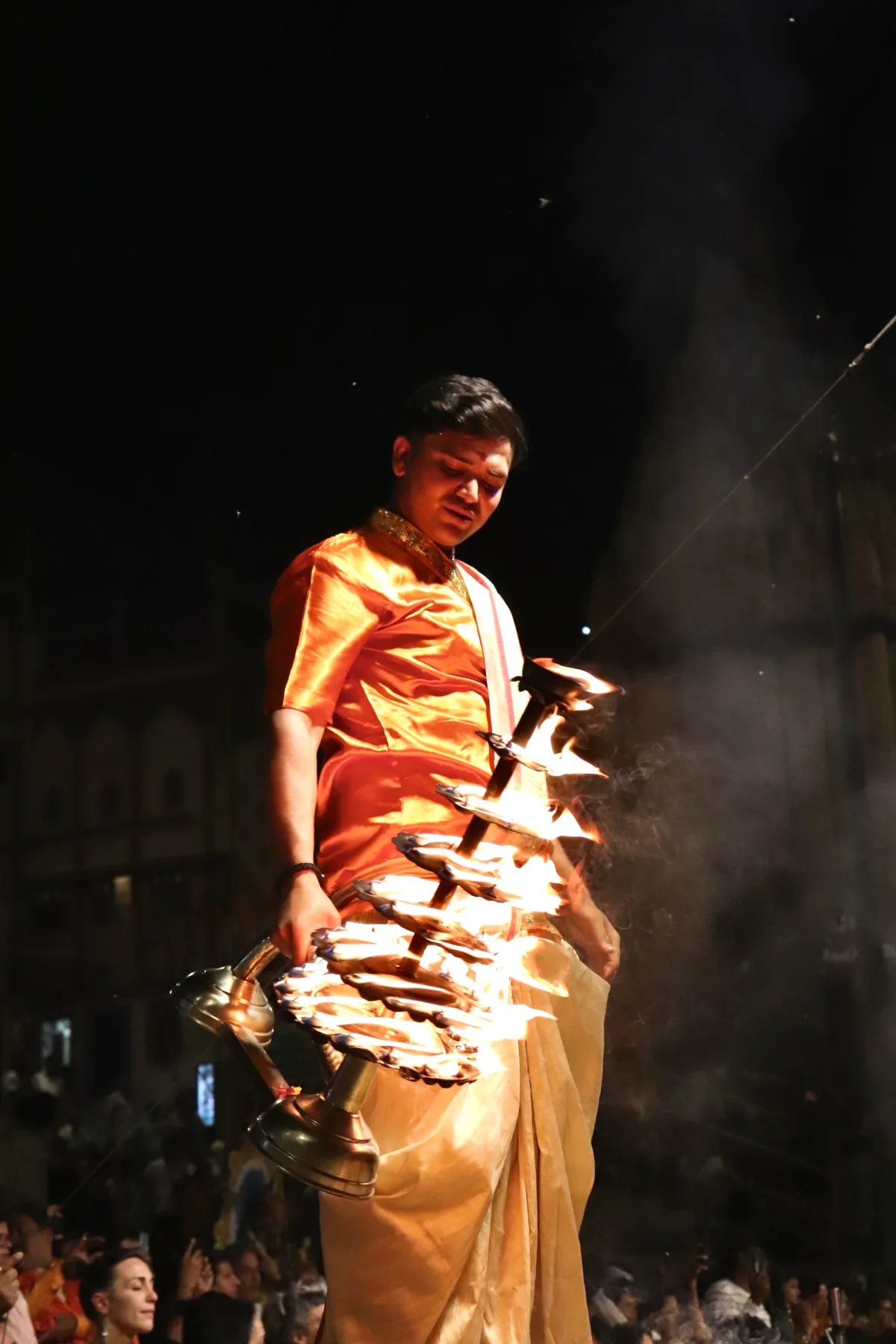
Evening (5:15–7:30 PM): Make your way to Dashashwamedh Ghat for the Ganga Aarti. Arrive at least 45 minutes before sunset to secure a good position. For your first viewing, a boat gives the best perspective — the entire illuminated ghat seen from the river. After the Aarti, walk through the evening lanes toward the Kashi Vishwanath Corridor. You will not do the temple darshan tonight — save the queue and the intensity for early morning on Day 2. But walking the Corridor at night, watching the marble glow under the lamps, is its own experience.
Dinner: Eat in the lanes near Godaulia or near Assi Ghat. First Banarasi meal: kachori sabzi, or a full thali.
Day 2: Sunrise Boat Ride, Kashi Vishwanath, and Sarnath
Day 2 is the most intensive — the core of the Varanasi experience.
Early Morning (5:00–7:30 AM): Sunrise boat ride. Arrange the boat the evening before. The 2-hour ride goes from Dashashwamedh or Assi south to north — all the way to Panchganga Ghat and back — as the sun rises over the far bank. This is one of the most memorable sights in India. Return to the ghat steps for breakfast by 7:30 AM.
Breakfast (7:30–8:30 AM): Banarasi kachori sabzi with kulhad chai at a ghat-side stall. Take time over this — the morning activity on the ghats is worth observing.
Morning (9:00 AM–1:00 PM): Kashi Vishwanath Temple. Walk from Dashashwamedh (10 minutes). Arrive by 9 AM for shorter queues. No leather, no phones inside. Allow 1.5–2 hours for the full darshan and corridor walk. After the temple, spend 1 hour in the old city lanes: Vishwanath Gali, Kachori Gali, the silk shops — a guide makes this section come alive with historical and cultural context.
Afternoon (2:00–7:00 PM): Sarnath day trip. Take a pre-paid taxi from Godaulia (₹350–500 one way; 30–40 minutes each way, 11 km). Visit in this order: Dhamek Stupa (the great 5th-century stupa marking where Buddha preached), Sarnath Archaeological Museum (houses the original Lion Capital of Ashoka — India's national emblem, as well as some of the finest Buddhist sculpture anywhere in the world), Mulagandhakuti Vihara (a 1930s temple with beautiful murals). The deer park around the Dhamek Stupa is peaceful and pleasant. Return to Varanasi by 7:00 PM.
Evening: Optional second Ganga Aarti viewing (if you want to see it from a different position) or a quiet evening at the ghats.
Day 3: Heritage Walk, Southern Temples, and Southern Ghats
Day 3 goes deeper — into the city's culture and its quieter spaces.
Morning (7:00–10:00 AM): Old city heritage walk with a Spirit of Kashi guide. The 2–3 hour walk covers the ancient lanes, a silk weaving workshop (to see the handloom process behind Banarasi silk), the architecture of the old havelis (mansions), the wholesale markets, and lesser-known temples. This is where Varanasi's living heritage is most legible — the city as it has been for centuries, away from the tourist concentration of the central ghats.
Mid-Morning (10:00 AM–12:30 PM): Southern temple circuit in the Durga Kund area. Three temples: Durga Temple (vivid red Nagara-style temple by its tank), Sankat Mochan Temple (fragrant, calm, deeply local in atmosphere), and Tulsi Manas Temple (built on the site where Tulsidas composed the Ramcharitmanas).
Afternoon (1:00–5:00 PM): After lunch, walk the southern ghat stretch from Assi Ghat northward — Tulsi Ghat, Kedar Ghat, Harishchandra Ghat, and Munshi Ghat. This section of the riverfront is less crowded than the central ghats and offers a more personal encounter with daily ghat life. Harishchandra Ghat (the older cremation ghat) can be observed respectfully from a distance.
Late Afternoon and Evening: Banarasi lassi at one of the established shops near Assi Ghat or in the old city. Banarasi paan from a trusted paan wallah in the lanes. A final sunset from a rooftop with a Ganga view, or one more Ganga Aarti if the timing works.
What You Will Have Seen in 3 Days
After three days with this plan, you will have experienced: the Ganga at sunrise from a boat; Kashi Vishwanath Temple darshan at the main Jyotirlinga; the medieval old city lanes on foot; the evening Ganga Aarti from multiple perspectives; Sarnath's Buddhist heritage (the Dhamek Stupa and the Ashoka Lion Capital); the southern temple circuit (Durga, Sankat Mochan, Tulsi Manas); and the full southern ghat walk.
What a 3-day plan does not include: Ramnagar Fort (across the river), the northern ghats beyond Manikarnika, the Banarasi silk-weaving district in depth, and the quieter neighbourhoods of the old city beyond the main lanes. These open up on Day 4 and 5.
Frequently Asked Questions
Is 3 days enough for Varanasi?▼
Three days is the sweet spot for a first visit — enough time to cover the essential experiences without rushing any of them. You will see the ghats at dawn and dusk, visit Kashi Vishwanath, walk the old city, visit Sarnath, and explore the temple circuit. What three days will not give you is the deeper quiet of the city — the slower morning at a lesser-known ghat, the afternoon with the silk weavers, the unhurried second or third visit to the Aarti. Those belong to longer visits.
What is the best time of year for a 3-day Varanasi trip?▼
October to March is the recommended season: pleasant temperatures (15–28°C), clear skies, and the city's major festivals within reach. November is particularly good — post-monsoon freshness and, if the timing works, Dev Deepawali (the Festival of Lights on the ghats, held on the full moon of Kartik). February–March has Mahashivratri, the most spiritually intense time in the Varanasi calendar. April–September brings significant heat (and rains from July); while the monsoon Varanasi has a different beauty, it is not ideal for a first visit.