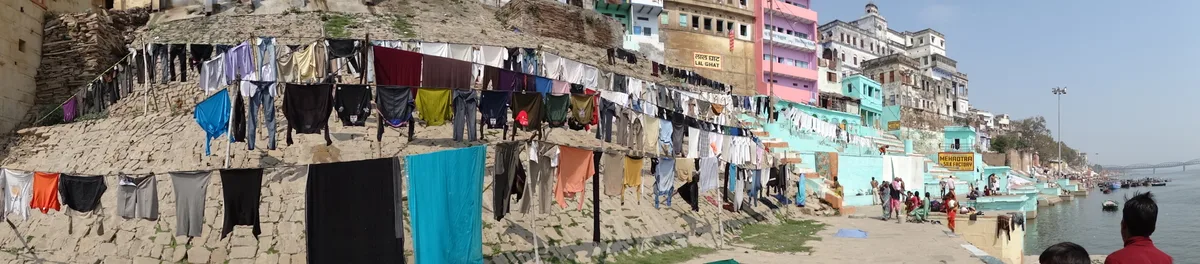
The River Ganga in Varanasi
Sacred, ancient, and alive — the river that makes Kashi what it is
In Varanasi, the River Ganga is not geography — it is theology. The city faces east towards the river, every significant religious event happens on its banks or in its waters, and the 6.5-kilometre arc of 84 ghats that lines the river is the most sacred urban riverfront in the world. To stand at the river's edge at dawn in Varanasi — with the temple bells sounding, the river mist lifting, and the first light catching the ancient ghat architecture — is to understand why this place has drawn pilgrims for three thousand years.
The Ganga at Varanasi flows from south to north — an unusual reversal that Hindu theology reads as the river's act of devotion to Shiva, turning back on itself to face the lord of Kashi. This northward flow is called the Uttaravahini Ganga, and it magnifies the sacred power of bathing at this particular stretch of the river.
The Living River
The Ganga is not a museum piece in Varanasi. Every morning at sunrise, tens of thousands of pilgrims bathe in the river at the ghats — a ritual that has continued without interruption for more than three thousand years. The river receives flower offerings, incense, the ashes of the cremated, the prayers of the dying, and the first bath of the newly born. It is simultaneously the most sacred and the most ordinary thing in the city.
The scale of the Ganga at Varanasi changes dramatically with the seasons. In winter (November–February), the river is at its lowest — the ghats are at maximum height, the steps fully visible, the sandbars exposed on the far bank. In monsoon (July–September), the river can rise fifteen metres or more, submerging the lower ghats and changing the entire character of the riverfront. Both the high and the low river are photogenic; they are simply different cities.
The Ganga Aarti
Every evening at Dashashwamedh Ghat, seven priests perform the Ganga Aarti — a fire ceremony of approximately 45 minutes in which enormous brass lamps are swung in elaborate patterns to the sound of bells, devotional music, and chanting. It is the most attended ceremony in Varanasi, drawing hundreds of thousands of spectators annually. Viewing from the river, from a boat, gives the widest perspective and the most striking visual experience.
Explore the Ganga in Varanasi
The 84 Ghats
Sacred stairways lining the river — each with its own mythology and purpose.
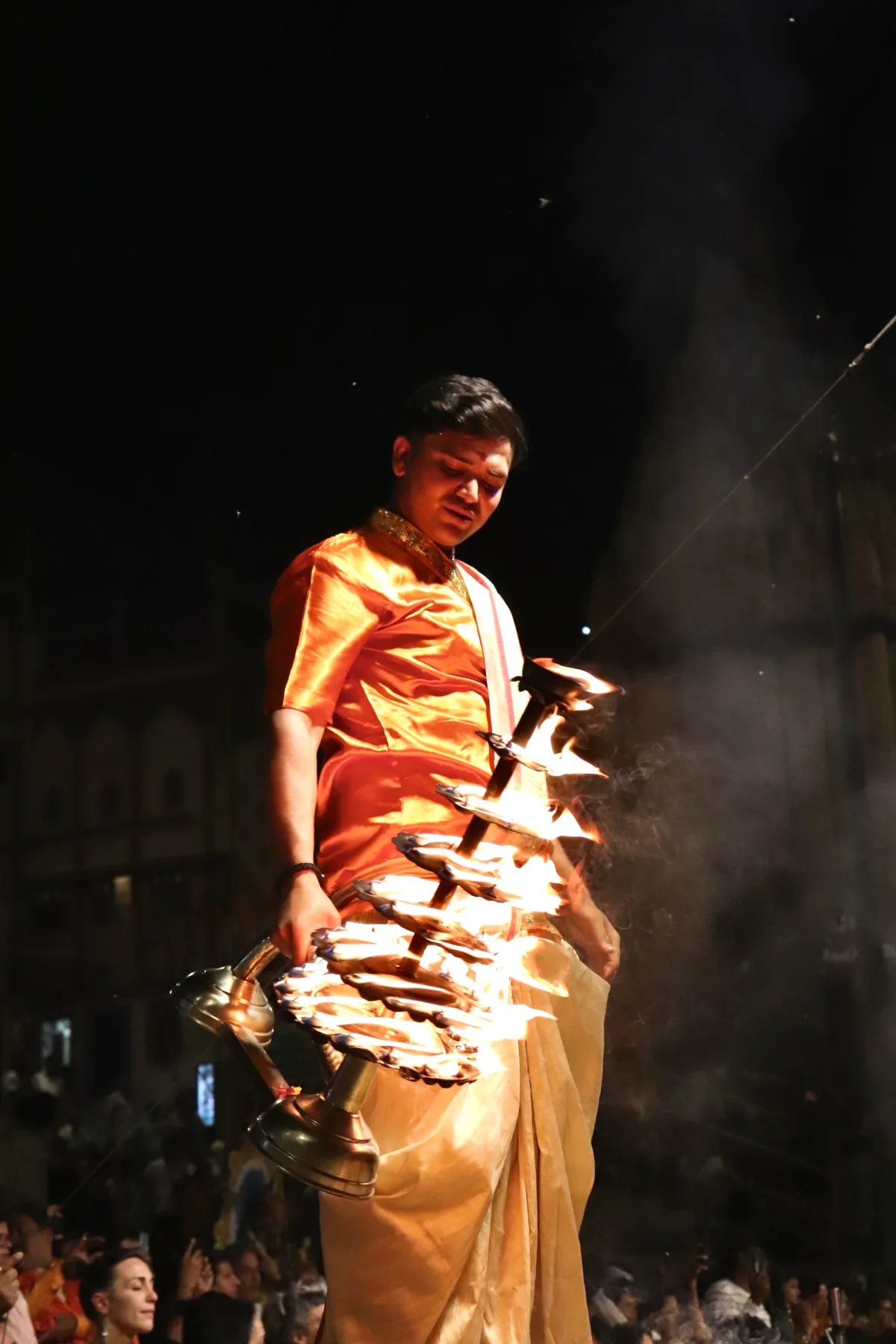
Ganga Aarti at Dashashwamedh
The nightly fire ceremony — seven priests, fire and bells, at Kashi's most sacred ghat.
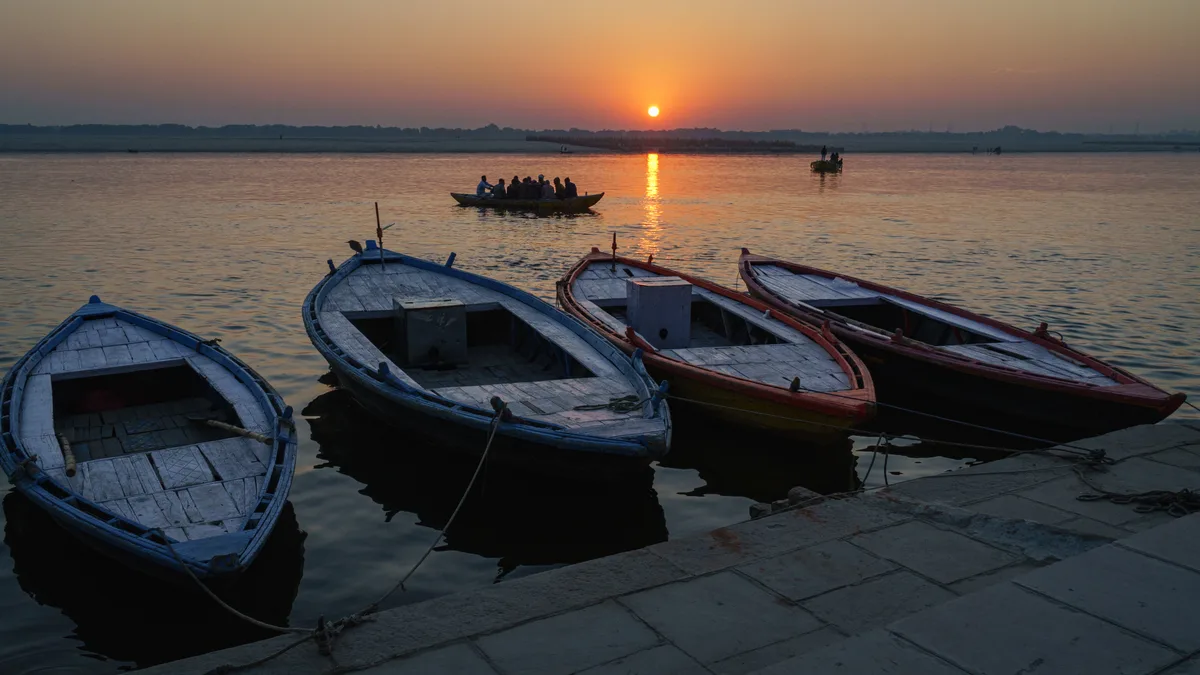
Sunrise Boat Ride
See all 84 ghats from the river at dawn — the defining Varanasi experience.
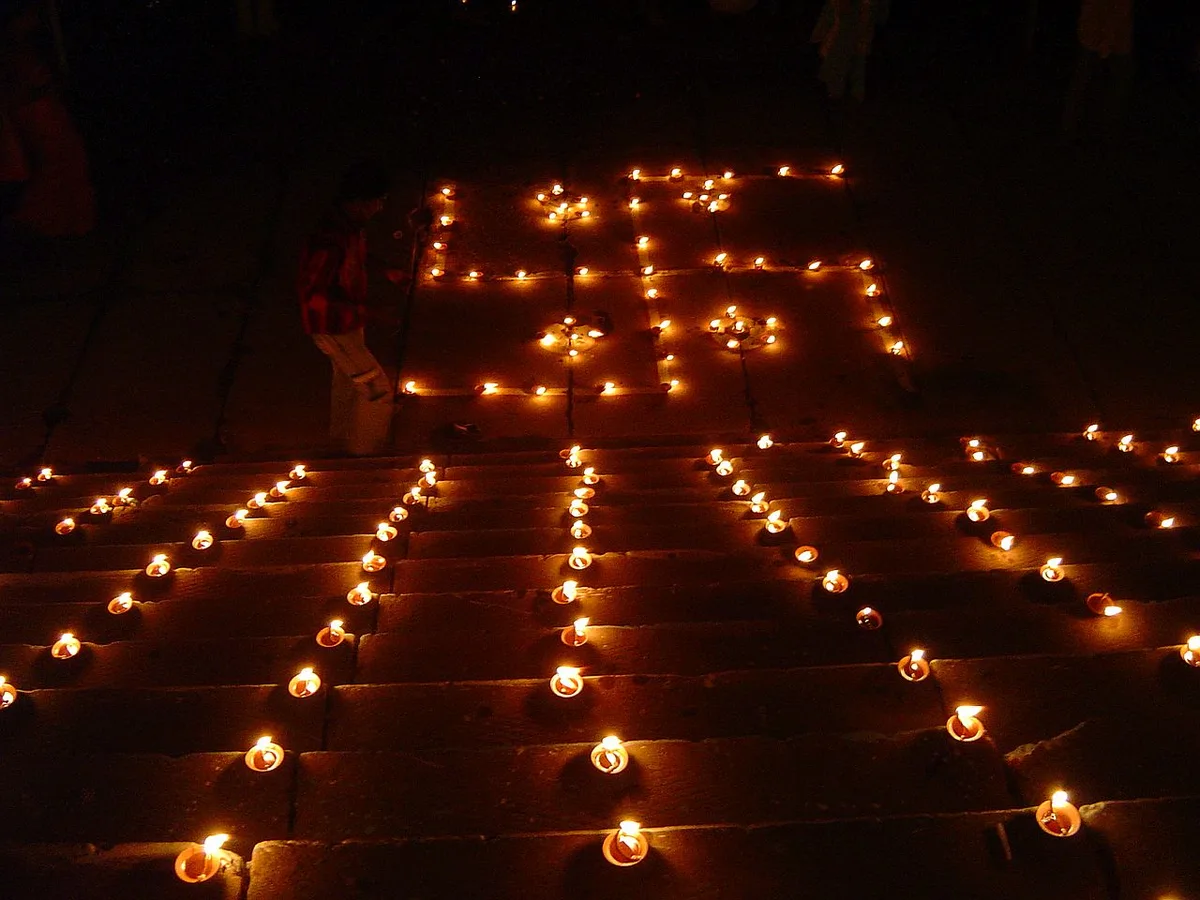
Dev Deepawali
One million lamps on every ghat — the River Ganga illuminated for Kartik Purnima.
River Ganga Varanasi — Questions & Answers
Why does the Ganga flow north at Varanasi?
At Varanasi, the River Ganga makes an unusual northward turn — flowing from south to north rather than the east-flowing course it follows elsewhere. This is called the Uttaravahini Ganga ('the northward-flowing Ganga'). Hindu theology interprets this as the river turning back on itself to face Lord Shiva, the presiding deity of Kashi, who resides in the north. The northward flow is considered to multiply the sacred power of bathing at this particular stretch of the river.
How long is the ghat stretch in Varanasi?
The ghat waterfront in Varanasi stretches approximately 6.5 kilometres (4 miles) along the western bank of the Ganga, from Assi Ghat in the south to Raj Ghat in the north. There are traditionally 84 ghats along this stretch. A sunrise boat ride covering the full length takes approximately 2–3 hours.
What is the best time to visit the Ganga in Varanasi?
Dawn is the most sacred and atmospheric time — pilgrims bathing, temple bells, morning mist on the river, and the first light on the ancient ghat architecture. The evening Ganga Aarti ceremony at Dashashwamedh Ghat is equally iconic. October to February offers the best weather. The river is at its lowest in winter (fully visible ghat steps) and highest in monsoon (July–September), when the lower ghats are submerged.
What is the Ganga Aarti ceremony?
The Ganga Aarti is a nightly fire-worship ceremony performed at Dashashwamedh Ghat, Varanasi. Seven priests stand on raised platforms and simultaneously perform an elaborate ritual of approximately 45 minutes, swinging enormous multi-tiered brass lamps in coordinated patterns to the sound of bells, conches, and devotional music. It is the most attended ceremony in Varanasi and one of the most visually spectacular religious events in India. The ceremony takes place every evening at or just after sunset.
Is it safe to bathe in the Ganga at Varanasi?
Millions of Hindu pilgrims bathe in the Ganga at Varanasi every year as a sacred act. From a religious perspective, the bathing ritual is central to pilgrimage in Kashi. From a water-quality perspective, river quality varies with season and location — it is generally better after monsoon (October–February) and lower near the downstream zones. Most international visitors observe rather than bathe, but the choice is personal. Pilgrims from across India bathe without hesitation.
What is the best way to experience the Ganga in Varanasi?
A sunrise boat ride is the most recommended experience — seeing the entire 6.5-kilometre ghat waterfront from the river at dawn gives a perspective impossible from the ghat steps. The evening Ganga Aarti from a boat (rather than the crowded ghat) provides an unobstructed view of all seven priests simultaneously. Walking the ghat promenade from Assi to Dashashwamedh is the best way to absorb the full variety of ghat life at ground level.
Experience the Ganga
Spirit of Kashi offers sunrise boat rides, Ganga Aarti boat viewing, and the complete ghat experience with knowledgeable local guides.