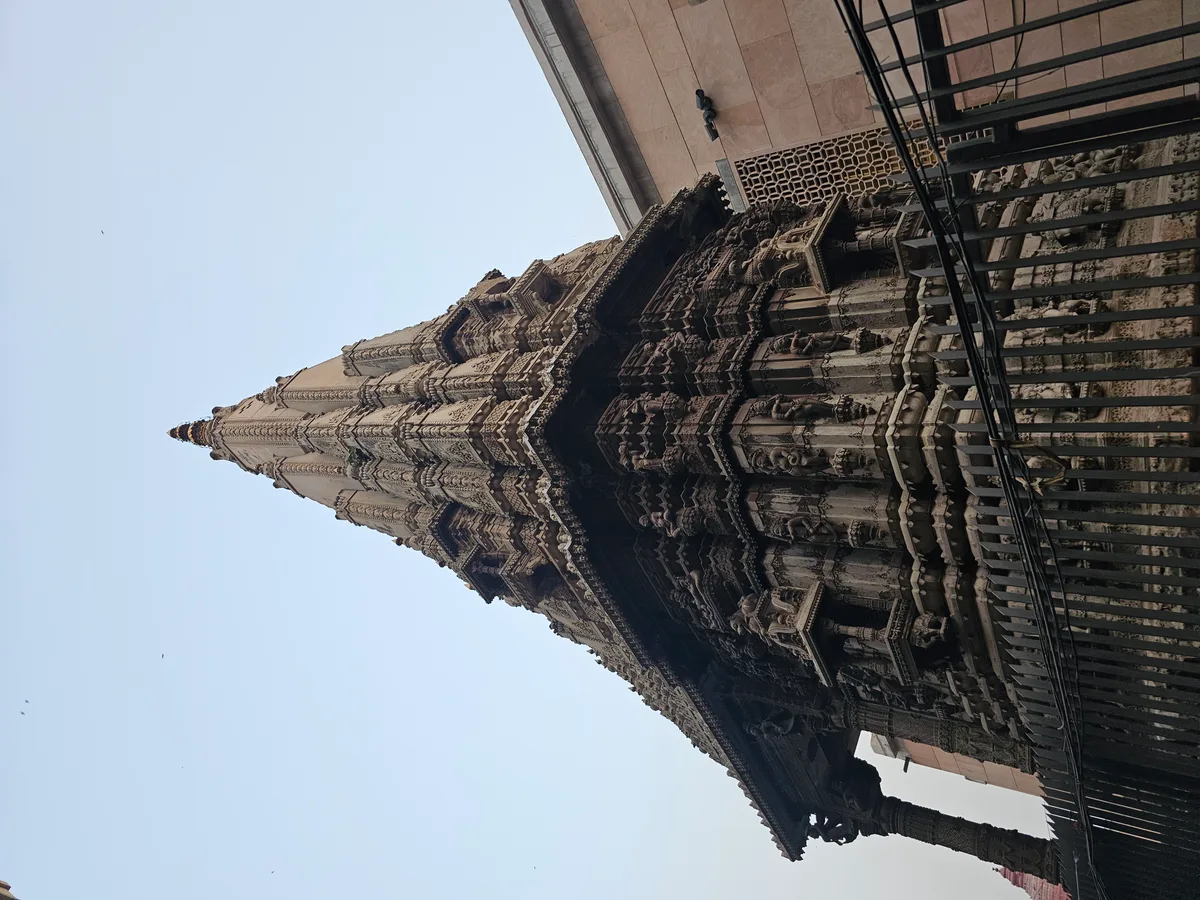
Kashi Vishwanath Temple: Varanasi's Most Sacred Shiva Shrine
The most sacred Shiva temple in Hinduism — one of the twelve Jyotirlingas
Kashi Vishwanath Temple is the spiritual axis of Varanasi and one of the holiest sites in all of Hinduism. The presiding deity Vishwanath — 'Lord of the Universe' — is an aspect of Shiva, manifested here as a Jyotirlinga (one of twelve self-manifested pillars of light scattered across India). Hindus believe that dying in Kashi and worshipping here grants liberation from the cycle of rebirth. Every day, tens of thousands of devotees enter the temple complex to offer bel patra, milk, and prayers.
The Jyotirlinga and Why Kashi Vishwanath is Supreme
Among Hinduism's twelve Jyotirlingas — the most sacred manifestations of Shiva — Kashi Vishwanath occupies the most exalted position in popular devotion. The significance lies partly in the nature of the site itself: Kashi is considered Shiva's own city, his personal abode that stands apart from the ordinary cycle of cosmic creation and dissolution.
According to the Kashi Mahatmya, Kashi Vishwanath personally resides in Kashi and will remain here even when the universe ends and begins again. Shiva himself performs puja to this lingam. The temple is therefore understood not merely as a place of worship, but as the direct presence of the divine — Shiva actually residing in the lingam, not symbolically represented by it.
The Shiva lingam at Kashi Vishwanath is relatively small — about 60 cm in height — and is set in a silver altar in the innermost sanctum. It is smeared with bilva (bel) leaves, milk, curd, honey, ghee, sugar, and flowers by the priests throughout the day in a continuous cycle of worship.
Temple History: Destruction and Reconstruction
The original Kashi Vishwanath temple was demolished by Mughal Emperor Aurangzeb in 1669. A mosque — the Gyanvapi Mosque — was constructed on part of the site, and remains there today. This is one of Hinduism's most contested historical wounds, and the Gyanvapi Mosque-Temple dispute is an ongoing legal and political matter.
The current Kashi Vishwanath Temple was rebuilt in 1780 by Rani Ahilya Bai Holkar of Indore, one of the most celebrated queens in Indian history and a prolific rebuilder of Hindu temples across India. The gold-plated spire was donated by Maharaja Ranjit Singh of the Sikh Empire in 1839 — approximately 800 kg of gold was used.
In 2021, Prime Minister Narendra Modi inaugurated the Kashi Vishwanath Corridor — a major expansion project that cleared hundreds of buildings between the temple and the ghats, creating an open processional path to the Ganga for the first time. The Corridor dramatically expanded the temple complex and improved visitor access and flow.
How to Visit: Darshan, Timings, and Practical Planning
The temple is open from 3:00 AM to 11:00 PM daily, with five principal aartis (Mangala Aarti, Bhog Aarti, Sandhya Aarti, Shringara Aarti, and Shayan Aarti) conducted throughout the day.
Only Hindus are permitted entry to the inner sanctum (Garbha Griha). Non-Hindus can access the Corridor area and outer temple precinct, and can view the temple exterior and surroundings. This restriction is strictly maintained.
Security at Kashi Vishwanath is extremely thorough: no mobile phones, bags, cameras, leather items, or non-Hindu religious symbols are permitted inside. All items must be deposited at the free cloak room before entering. The security queue can be long — allow 1–2 hours for the complete visit, longer during festivals or weekends.
For the best darshan experience, arrive either at Mangala Aarti (3:00–4:00 AM, extremely auspicious but very early) or late evening after 8:00 PM when queues are shorter. Fridays and Mondays (Shiva's sacred days) are always the most crowded.
The Kashi Vishwanath Corridor
The Corridor opened in December 2021 and transformed the approach to the temple. Previously, the only access was through the dense lanes of old Varanasi — an atmospheric but physically challenging route. The Corridor creates a wide, open promenade from the Ganga ghats (near Lalita Ghat) to the temple entrance, with elaborate new buildings housing facilities, smaller shrines, and administrative offices.
The new complex includes guest facilities, dharamshalas, museums, and spaces for religious programmes. Hundreds of old buildings were demolished to create the Corridor — a move that drew both celebration from devotees and criticism from heritage conservationists. The Corridor gives the temple precinct a visual grandeur it lacked, but has changed the character of the surrounding neighbourhood significantly.
Frequently Asked Questions
Can non-Hindus enter Kashi Vishwanath Temple?▼
Non-Hindus can enter the Kashi Vishwanath Corridor and outer complex but are not permitted into the inner sanctum (Garbha Griha) where the Jyotirlinga is located. This restriction is enforced at security. Non-Hindu visitors can observe and photograph the temple exterior, attend to the general atmosphere of the Corridor, and visit many of the smaller shrines in the complex.
How long should I allow for a visit to Kashi Vishwanath Temple?▼
Allow 1.5–3 hours: 30–60 minutes for the security queue, 30–45 minutes for darshan inside, and additional time to explore the Corridor and adjacent areas. On major festival days (Mahashivratri, Shravana Mondays), waiting times can extend to 4–6 hours. Planning an early morning visit (5–7 AM on a weekday) minimises queue time.
What is the Gyanvapi Mosque next to the temple?▼
The Gyanvapi Mosque was built by Aurangzeb in 1669 on the site of the original Kashi Vishwanath temple. It stands adjacent to the current temple and is active as a mosque. The legal status and historical significance of the site are a matter of ongoing dispute in Indian courts. Both the mosque and the temple currently operate and are accessed by their respective communities.