Varanasi 2-Day Itinerary: Ghats, Temples, and Old City in 48 Hours
Two days to see the essential Varanasi — deliberately, without feeling rushed
Two days in Varanasi allows a proper experience of the city's essential layers — without the pace of the one-day plan and without the commitment of three or more nights. Day 1 is the evening arrival: the Ganga Aarti as your first real encounter with the city. Day 2 is the full day: sunrise on the river, Kashi Vishwanath Temple, an old city walk, the temple circuit in the Durga Kund area, and a walk along the southern ghats. Sarnath does not fit comfortably into this plan — either skip it or substitute the Day 2 temple circuit with a Sarnath morning if Buddhism is your primary interest.
Day 1 Afternoon: Arrive and Find Your Bearings
Arrive in Varanasi in the early to mid-afternoon — this gives you time to check in, orientate, and reach Dashashwamedh Ghat for the Aarti without rushing.
Most Spirit of Kashi partner guesthouses and hotels are in the Assi Ghat area or near the old city. Assi Ghat (the southern anchor of the ghat corridor) is a good base for a two-day visit: quieter than the central ghats area, with good cafes and easy access to the full ghat walk.
After check-in, take a short walk to your nearest ghat — not to see anything specific, but to acclimatise. Varanasi has a particular sensory density — the sounds, smells, and pace are unlike other Indian cities — and your first 30 minutes at the ghats should be about absorbing the atmosphere, not following a plan.
Day 1 Evening: Ganga Aarti at Dashashwamedh Ghat
Take an auto-rickshaw to Godaulia (the last vehicle junction for the central ghat area) and walk to Dashashwamedh Ghat — roughly 10 minutes on foot through the lanes. Arrive by 5:15 PM in winter (October–February), or 6:00 PM in spring and autumn.
For your first Ganga Aarti viewing, a position slightly elevated — a riverside restaurant balcony or the upper steps of the ghat — gives the clearest view. The ceremony is simultaneously highly theatrical and genuinely devotional — seven priests, large brass lamps, conch shells, incense, and the chanting of Sanskrit hymns to the river goddess.
After the Aarti, walk the lane from Dashashwamedh toward the Kashi Vishwanath Corridor. You will not enter the temple tonight — save the darshan for early morning tomorrow when queues are shorter. But walk through the Corridor entrance, look at the illuminated marble facade, and understand the layout for tomorrow morning.
Dinner in the old city: the lanes near Kachori Gali have good simple restaurants. Return to your hotel by 10 PM.
Day 2 Early Morning: Sunrise Boat Ride
Wake at 4:30 AM. Your boat should be arranged the evening before — tell your hotel or guesthouse, or walk to Dashashwamedh or Assi Ghat after dinner and negotiate directly with a boatman (fix the price then, not at 5 AM).
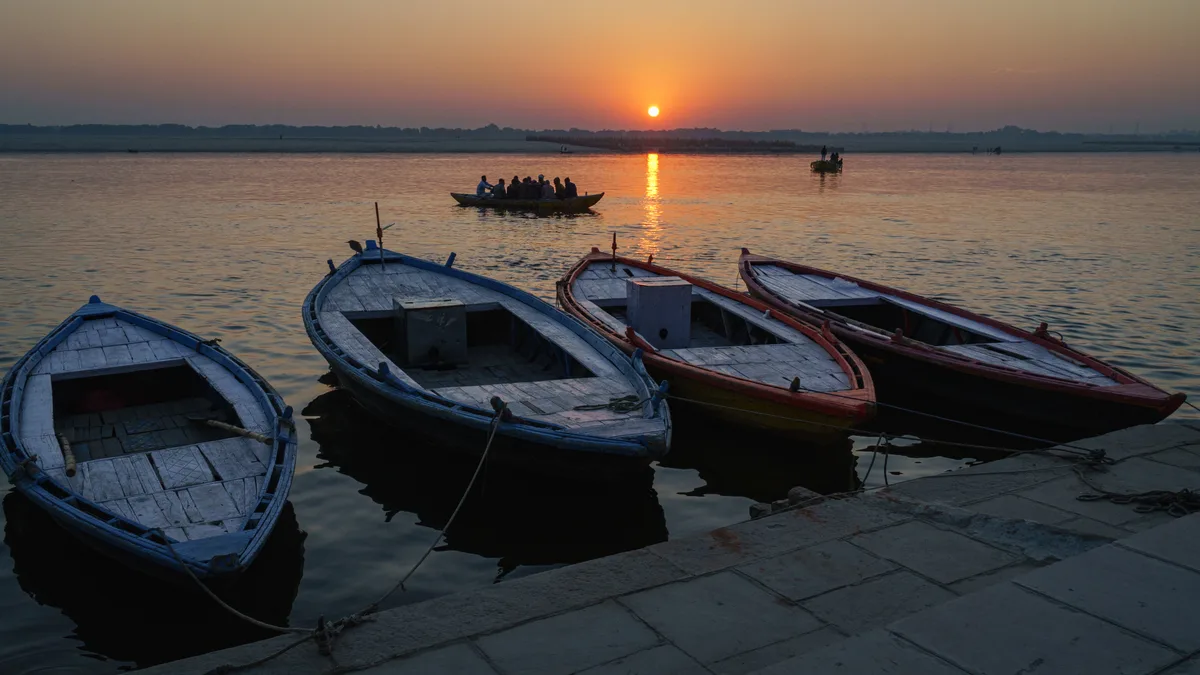
Depart by 5:00–5:15 AM for the sunrise ride. The standard two-day visitor route: south from Dashashwamedh past Assi Ghat, then north all the way to Manikarnika and Panchganga. The full round trip is approximately 2 hours. The sunrise — a pale pink light spreading over the far bank while the near bank erupts with morning ritual — is the defining Varanasi experience. No photograph fully captures it; it needs to be witnessed from the water.
Return to the ghat steps by 7:00–7:30 AM. Breakfast: kachori sabzi at a ghat-side stall — this is the correct Varanasi morning meal.
Day 2 Morning: Kashi Vishwanath Temple and Old City
From Dashashwamedh, walk to Kashi Vishwanath Temple (10 minutes). Arrive by 9:00 AM — this is the sweet spot for shorter queues on weekdays. Leave all leather items in the cloak room. No phones inside.
Allow 1.5 hours for the complete temple visit: the queue, the darshan at the main Jyotirlinga shrine, the smaller shrines within the complex, and the Kashi Vishwanath Corridor (a magnificent modern marble walkway connecting the river to the temple, opened 2021–22).
After the temple, enter the old city lanes: Vishwanath Gali, Kachori Gali, Thatheri Bazaar. On a two-day visit, a guide for this section transforms what might otherwise be a confusing walk into a layered historical and cultural narrative — the medieval lane layout, the trade castes, the domestic life visible through open doorways. Allow 1.5–2 hours for the old city walk. Emerge at Godaulia by 1:00 PM.
Day 2 Afternoon: Southern Temple Circuit
After lunch near Godaulia or near your hotel, take an auto-rickshaw to the Durga Kund area (15–20 minutes south of the old city).
Three temples worth visiting, all within 15 minutes of each other:
Durga Temple: A vivid red Nagara-style temple beside a square tank, dedicated to Durga. The tank (kund) is one of the largest in Varanasi and the compound is pleasant to walk around. Active place of worship — dress appropriately.
Sankat Mochan Temple: Dedicated to Hanuman. Calm, fragrant (the temple maintains a garden), and one of the most beloved temples in Varanasi among locals. The atmosphere here is less intensely pilgrimage-focused than the central temple area — more contemplative.
Tulsi Manas Temple: A relatively modern temple (1964) built on the site where the poet-saint Tulsidas wrote the Ramcharitmanas, the popular Hindi retelling of the Ramayana. The walls of the temple are inscribed with verses from the text. Interesting for its literary-devotional character.
Allow 1.5 hours across all three temples.
Day 2 Late Afternoon: Southern Ghats Walk
From the Durga Kund area, walk or take an auto to Assi Ghat. From Assi, walk north along the southern ghat stretch: Tulsi Ghat, Kedar Ghat, Harishchandra Ghat, and Munshi Ghat. This section of the riverfront is significantly less crowded than the central ghats and gives a more personal encounter with ghat life — laundry, children playing, sadhus meditating, the occasional small puja being performed.
Harishchandra Ghat is the older of the two main cremation ghats (Manikarnika is more active). As with Manikarnika, observation with full respect is appropriate — no photography, no pointing, quiet presence only.
End the walk wherever you like and take an auto back to your hotel or the station.
Frequently Asked Questions
Is 2 days enough to see all the main things in Varanasi?▼
Two days covers the essential experiences — Ganga Aarti, sunrise boat ride, Kashi Vishwanath Temple, old city walk, and the southern temple circuit. What it does not allow time for: Sarnath, Ramnagar Fort, the deeper old city neighborhoods, the silk-weaving district, and the northern ghats. For a first visit without specific constraints, three days gives a significantly more complete experience at a more comfortable pace.
Can I combine Varanasi and Sarnath in 2 days?▼
Yes, but you will have to choose between Sarnath and the southern temple circuit — both cannot fit comfortably into Day 2. If Sarnath is your priority, substitute the afternoon temple circuit with a Sarnath visit (2 PM–6 PM gives enough time for the Dhamek Stupa, the museum, and the main Buddhist temples). Take a pre-paid taxi rather than navigating the journey independently on your first day.