Navratri in Varanasi: Nine Nights of the Goddess in Kashi
Nine nights — the goddess in nine forms — Kashi ablaze with Shakti
Navratri ('nine nights') is one of the most important festivals in the Hindu calendar — nine nights of worship dedicated to the goddess Durga in her nine forms (Navadurga). In Varanasi, where the goddess Vishalakshi is one of the 51 Shakti Peethas, Navratri takes on exceptional significance. The Durga Kund Mandir — Varanasi's most important Durga temple — is the epicentre of the celebration, attracting enormous crowds nightly. Temples across the city are decorated with flowers and lights; Garba and Dandiya dance gatherings are held; and the night air fills with devotional music and the sound of the dhol.
The Two Navratris
There are two major Navratri celebrations each year in the Hindu calendar:
Sharad Navratri (Autumn Navratri) — The more widely celebrated of the two, falling in the lunar month of Ashwin (September–October), culminating on Vijayadashami (Dussehra). This Navratri coincides with Durga Puja, the great goddess festival of eastern India, and is the Navratri most associated with Durga worship.
Chaitra Navratri (Spring Navratri) — Occurring in the month of Chaitra (March–April), this Navratri is equally sacred in many north Indian traditions. It culminates in Ram Navami — the birth of Lord Rama.
In Varanasi, both Navratris are observed with intensity, though Sharad Navratri (leading to Dussehra) is generally the more spectacular public celebration.
Nine Forms of the Goddess
Each of the nine nights of Navratri is associated with a different form of the goddess — the Navadurga. In sequence: Shailaputri (daughter of the mountains), Brahmacharini (the ascetic), Chandraghanta (the moon-belled), Kushmanda (the cosmic egg), Skandamata (mother of Skanda), Katyayani (the warrior), Kalaratri (the dark night), Mahagauri (the radiant), and Siddhidatri (the bestower of powers).
In Varanasi, each form is associated with specific temples — creating a nine-temple circuit that some devoted pilgrims complete during the nine days. This circuit includes the Durga Kund Mandir, Vishalakshi Temple, Annapurna Temple, and various other goddess shrines across the city.
The ninth night (Navami) is the most intense — temples stay open through the night for continuous worship, and the tenth day (Vijayadashami) sees Ravan effigies burned in several locations across Varanasi as part of Dussehra celebrations.
Durga Kund Mandir During Navratri
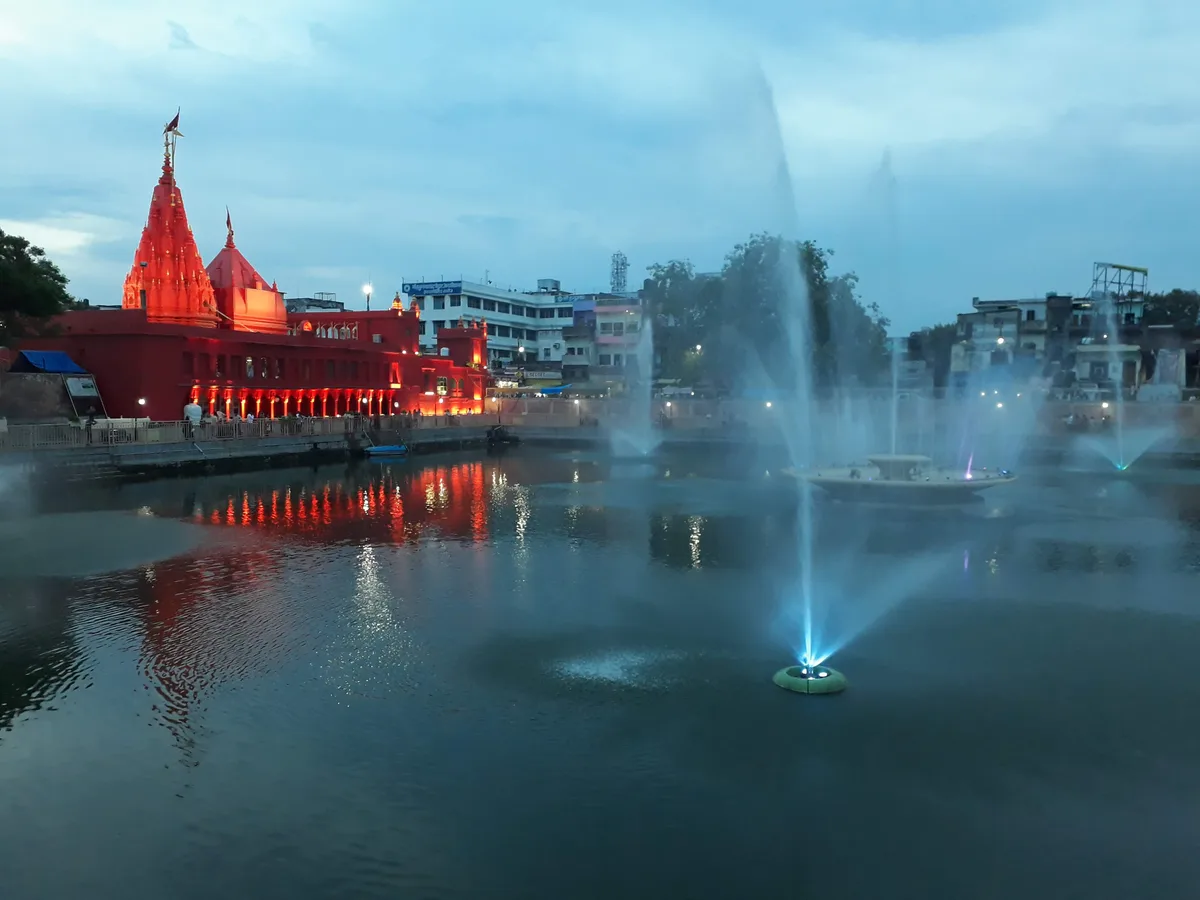
The Durga Kund Mandir — built in the 18th century and located beside a large sacred tank (kund) — is the most important destination for Navratri in Varanasi. During Navratri, the temple is open all nine nights for darshan.
The tank beside the temple is decorated with diyas during the festival; the temple exterior is covered with flowers and lights; and the queue for darshan on major nights (particularly Ashtami and Navami) can stretch for several hours. The atmosphere is festive — loud devotional music, the smell of incense and marigold, and the noise of the crowd create an intense sensory experience.
For the most atmospheric visit, aim for the evening of Ashtami (the eighth night) or Navami (the ninth night) — both see maximum decoration and the longest worship queues.
Frequently Asked Questions
When is Navratri in Varanasi?▼
Navratri dates follow the lunar calendar and shift each year. Sharad (Autumn) Navratri falls in September–October; Chaitra (Spring) Navratri falls in March–April. Always confirm exact dates against a current Hindu panchang (calendar) before travelling.
What temples should I visit during Navratri in Varanasi?▼
The Durga Kund Mandir is the primary destination. Add Vishalakshi Temple (one of the 51 Shakti Peethas near Mir Ghat), Annapurna Devi Temple (near Kashi Vishwanath), and Kal Bhairav Temple. Together, these form the core Kashi goddess circuit. Spirit of Kashi can arrange an evening Navratri temple circuit with a guide.