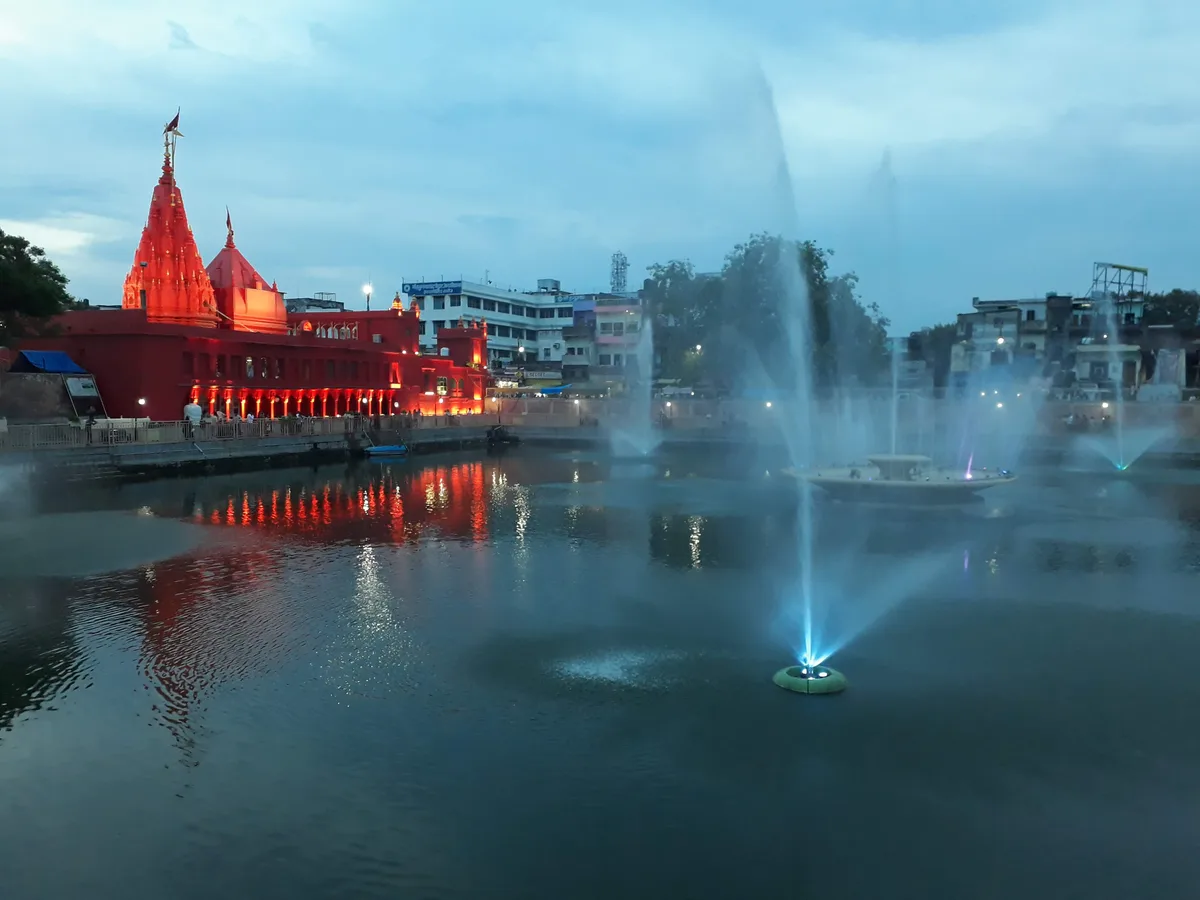
Durga Temple Varanasi: The Red Temple of Maa Durga
The vivid red shrine of Maa Durga — also called the Monkey Temple
Durga Temple — locally known as Durga Kund Mandir — is one of Varanasi's most visually distinctive temples, its multi-tiered north Indian nagara-style spires painted in a vivid terracotta red that stands in sharp contrast to the white marble and grey stone of the city's other shrines. Built in the 18th century beside a large sacred tank (kund), the temple is dedicated to Maa Durga, the supreme goddess of power and protection, and is one of the most active sites in the city during the Navratri festivals.
History and Architecture
The temple was built in the 18th century, during the period of Maratha-supported reconstruction of Varanasi's sacred infrastructure. The patron is believed to have been a Bengali queen. The temple follows the North Indian nagara architectural style, with multiple shikhara towers rising to a central peak — a common form in Varanasi but here rendered especially dramatic by the uniform red painting applied to the entire structure.
The Durga Kund (tank) beside the temple is a large rectangular water body that was historically used for ritual bathing. It is also home to large turtles and attracts birds, particularly during winter. The tank was historically maintained for pilgrims, though its use for bathing is now limited.
Why It's Called the 'Monkey Temple'
Durga Temple is popularly called the 'Monkey Temple' by travellers and local non-Hindus — because the resident population of rhesus macaques is visible throughout the temple complex, on the walls, in the trees around the tank, and at the temple entrance. Like the monkeys at Sankat Mochan, these are considered sacred (associated with Durga's divine power) and are fed by devotees.
The monkeys are more aggressive than the langurs at Sankat Mochan — they will grab uncovered food, plastic bags, or anything shiny with little warning. Visitors should keep bags closed, avoid conspicuously displaying food or cameras, and be watchful when approaching the temple entrance.
Navratri: The Temple at its Most Vibrant
Durga Temple's most important festival season is Navratri — the nine-night festival of the goddess, celebrated twice yearly (Chaitra Navratri in March–April, and Shardiya Navratri in October–November). During Navratri, the temple operates essentially around the clock, with continuous puja, bhajan singing, and enormous crowds of devotees.
The temple is decorated with lights and flowers; elaborate prasad is distributed; and the entire area around Durga Kund becomes a festival ground. For visitors in Varanasi during Navratri, the temple is unmissable — it represents the full intensity of goddess worship in north India at its most alive.
Frequently Asked Questions
Is Durga Temple (Durga Kund) open to non-Hindus?▼
The outer courtyard and the area around the temple and kund are accessible to all visitors. Entry to the inner sanctum varies — policies at this temple are sometimes restrictive for non-Hindus. Check locally. Respectful outer observation is always possible.
When is the best time to visit Durga Temple?▼
For regular visits: early morning (6–8 AM) offers good light and a devotional atmosphere without extreme crowds. For festivals: Navratri (October) is the most spectacular time, though very crowded. The temple is also beautiful during Diwali when it is illuminated.