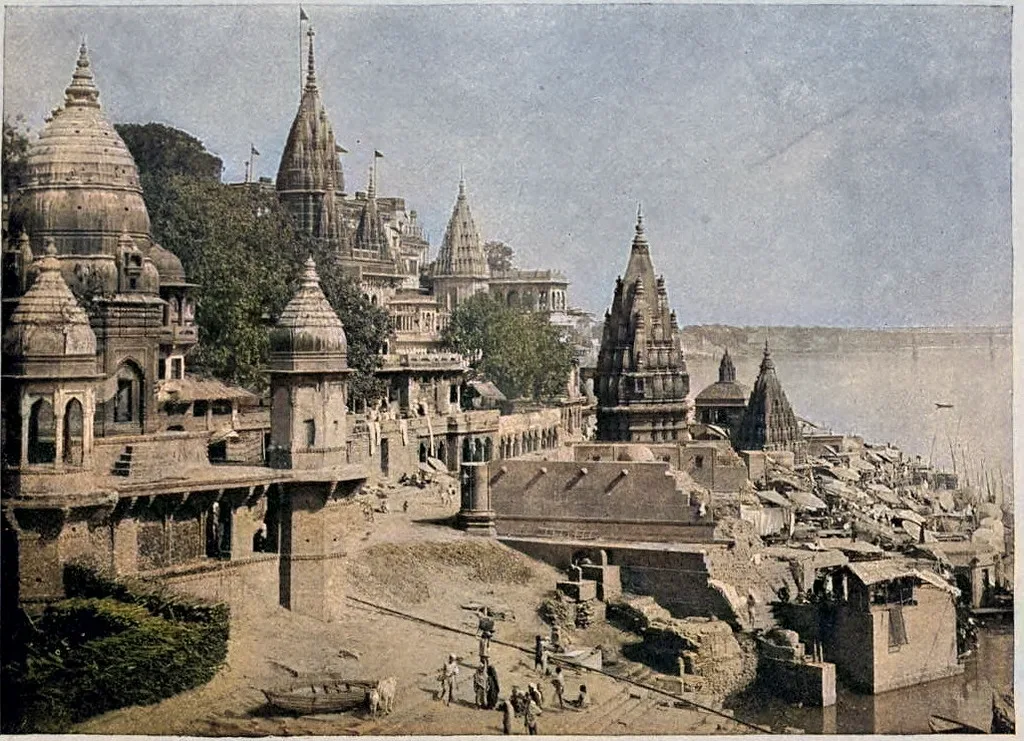
Moksha in Kashi: Why Varanasi Is the City of Liberation
The city where dying is a form of grace — Shiva's Kashi Labh, the gift of the eternal city
In the Hindu tradition, Varanasi (Kashi) is the only place on earth where liberation from the cycle of birth and death — moksha — is available to all who die within its sacred boundaries, regardless of caste, creed, or the merit accumulated in their lifetime. This is not a peripheral belief: it is the central cosmological claim that has made Kashi the most sacred city in Hinduism for at least three thousand years, and the reason that pilgrims come to die in Varanasi — and that corpses are brought from across India to be cremated at Manikarnika Ghat.
The Theology of Moksha in Kashi
In Hindu philosophy, the ultimate goal of human existence is moksha — liberation from the cycle of samsara (birth, death, and rebirth). Most paths to moksha require lifetimes of accumulated good karma, spiritual practice, and devotion. Kashi is unique: according to Hindu scripture and the Kashi Khanda of the Skanda Purana, anyone who dies within the sacred boundary of Kashi (the area defined by the Panchkroshi boundary) receives moksha — regardless of their prior spiritual attainment.
The mechanism of this liberation is the Taraka Mantra — the liberating mantra that Shiva himself is believed to whisper into the ear of the dying at the moment of death, guiding the soul directly to liberation. This makes the moment of death in Kashi not a tragedy but a culmination — the ultimate gift of the city.
The Sanskrit term for dying in Varanasi is Kashi Labh — 'the gain of Kashi'. Pilgrims who come to Varanasi specifically to die there are understood to be pursuing the highest spiritual opportunity available in human life.
Manikarnika Ghat: The Sacred Cremation Ground
Manikarnika Ghat is the most continuously burning cremation ground in India — and perhaps the world. Cremation fires have burned at Manikarnika without interruption, day and night, for centuries — possibly for thousands of years. The ghat is the most concentrated physical expression of Kashi's relationship with death and liberation.
The name Manikarnika refers to a jewelled earring (mani = jewel; karnika = earring) — according to tradition, this is where Sati's earring fell when Vishnu used the Sudarshana Chakra to dismember her body, making Manikarnika simultaneously a Shakti Peetha (a site of the goddess) and the supreme cremation ground.
Hundreds of cremations are performed at Manikarnika each day — the wood pyres are stacked at all hours, the smoke rises continuously, and the Dom community (the traditional keepers of the cremation fire) manage the unceasing work of the ghat. For visitors, Manikarnika is one of the most profound and sobering experiences Varanasi offers — a place where death is entirely normalised and the boundary between the physical and the spiritual is its most permeable.
The Experience of Kashi as a Visitor
Understanding the theology of moksha in Kashi fundamentally changes how a visitor experiences the city. The ghats are not merely scenic — they are tirthas (crossing points) where the boundary between the human and divine realms is thin. The aarti at Dashashwamedh is not merely a ceremony — it is a daily act of cosmic maintenance. The cremations at Manikarnika are not morbid spectacles — they are the city's most sacred service.
For visitors interested in understanding Varanasi at this depth, Spirit of Kashi offers guided experiences that explain the theological and cosmological framework before walking the ghats and visiting the temples. This context transforms what might otherwise be overwhelming or confusing into a coherent and profound encounter with one of the world's most intense spiritual cultures.
Visitors should approach Manikarnika Ghat with absolute respect. Photography of the cremation fires and of the dead and their families is strictly prohibited and deeply disrespectful. The correct posture is one of quiet observation from the permitted viewing areas — not tourist spectacle.
Frequently Asked Questions
Do people really come to Varanasi to die?▼
Yes — this is a real and ongoing practice. The Mukti Bhavan (House of Liberation) and similar dharamshalas in Varanasi specifically accommodate people who have come to Kashi to die — in many cases the terminally ill or very elderly who wish to achieve Kashi Labh. For devout Hindus, dying in Kashi is understood as the highest possible spiritual attainment, and families accompany their elders for this purpose.
What is the Taraka Mantra?▼
The Taraka Mantra is the liberating mantra believed to be whispered by Shiva himself into the ear of the dying at the moment of death in Kashi. The specific content of the mantra is not publicly disclosed — it is a secret between Shiva and the departing soul. Its effect, according to the Kashi Khanda, is to directly convey the soul to liberation (moksha), bypassing further cycles of rebirth.
Is Manikarnika Ghat safe and appropriate for tourists to visit?▼
Manikarnika Ghat is accessible to all visitors. It is safe in the ordinary sense. What it requires is sensitivity and respect: cremations are real funerals, and the families present are grieving. Do not photograph, do not gesture or point at the pyres or the dead, and do not approach the fires without explicit invitation from the Dom workers. Observe from the designated areas. A guide familiar with the ghat protocols is helpful for first-time visitors.