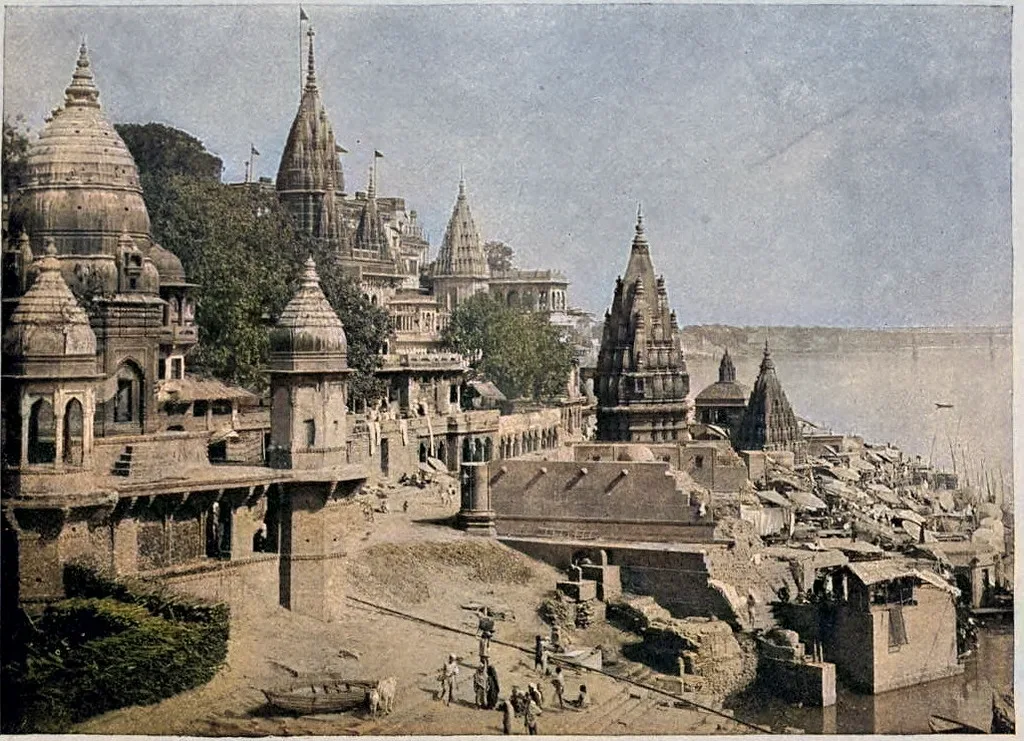
Manikarnika Ghat: The Sacred Cremation Ghat of Varanasi
Where Hindus believe the journey beyond life begins — fires that never go out
Manikarnika Ghat is one of the most profound places in all of Hinduism. The funeral pyres here burn continuously, night and day, without interruption for centuries — perhaps millennia. To Hindus, dying in Kashi and being cremated at Manikarnika is to achieve moksha (liberation from the cycle of rebirth and death), regardless of one's karma. This belief draws families from across India to bring their loved ones here for their final rites. Visiting Manikarnika is a deeply moving experience — and demands the highest respect.
Mythology: Why Manikarnika is Sacred
The name Manikarnika derives from 'mani' (jewel or earring) and 'karnika' (ear). According to Hindu scripture, when Lord Vishnu was performing a puja here, his earring fell into a pond at this spot. Shiva and Parvati, watching, were impressed by the devotion. In another version, it was Sati's earring (Sati being Shiva's consort) that fell here.
The deeper mythology concerns Kashi itself: it is believed that Kashi stands on the trishul (trident) of Shiva, lifted above the waters of dissolution. When the universe ends and begins again, Kashi — and Manikarnika — persist. Those who die here receive Shiva's personal initiation: he is said to whisper the Taraka Mantra (liberating mantra) into the ear of each soul at the moment of death. This is why Kashi is considered the ultimate place to die — not as a tragedy, but as the highest spiritual achievement.
The Cremation Rites and the Living Reality
Several funeral pyres burn simultaneously at Manikarnika at any given hour. Families arrive in procession through the narrow lanes of old Varanasi, the body carried on a bamboo litter, draped in silk or white cotton, accompanied by chanting of 'Ram naam satya hai' (the name of Ram is truth). The body is lowered into the Ganga for purification, then placed on a pyre of wood.
The Dom Raja family traditionally holds the hereditary right to maintain the sacred fire from which all pyres at Manikarnika are lit — a fire said to have burned without interruption for over 3,000 years. Different types of wood are used: common wood for ordinary cremations, mango or sandalwood for wealthier families. A full cremation takes 3–4 hours.
The cremation workers (Doms) are from the Dom caste, traditionally the only caste permitted to handle the dead in this sacred context. This role, seen by outsiders as difficult, is in Kashi considered one of the most spiritually significant — they are the gatekeepers of liberation.
Visiting Manikarnika: Etiquette and Approach
Visitors are welcome to observe from a respectful distance on the surrounding steps. The ghat is not closed to non-Hindus; however, specific etiquette must be followed without exception.
Photography at Manikarnika is strictly prohibited. Do not take out your phone or camera. This is not merely a local guideline — it is an absolute prohibition, and photographing a cremation is a profound violation of the family's grief and the sanctity of the moment. Anyone attempting photography will be, quite rightly, confronted immediately.
Do not attempt to approach the pyres closely. Keep to the upper steps or the edges of the ghat. Do not point at the pyres or the bodies. Dress modestly. Remove shoes when asked. Refuse firmly if anyone approaches to offer you a 'guided tour' or asks for donations for 'wood for the poor' — these are well-known scams. The actual families performing rites will not approach you.
The appropriate attitude is contemplative silence. For many visitors, Manikarnika is a genuinely transformative experience — the sight of mortality dealt with directly and without concealment, integrated into daily religious life, challenges assumptions about death in profound ways.
Frequently Asked Questions
Can non-Hindus visit Manikarnika Ghat?▼
Yes, non-Hindus can visit and observe from the ghat steps. There are no religious restrictions for entering the ghat area. The only absolute requirements are: no photography, respectful and quiet observation from a distance, and modest dress.
Is it disrespectful for tourists to watch cremations at Manikarnika?▼
In Varanasi's cultural and religious context, the presence of observers is accepted as part of the public nature of these rites — death here is not hidden. However, respectful observation (from a distance, in silence, without cameras) is very different from treating it as a tourist attraction. Go with the intention of understanding, not spectating.
Should I hire a guide for Manikarnika?▼
A guide from Spirit of Kashi can provide historical context, mythology, and help you understand the significance of what you're witnessing — adding depth to the experience. They will also help you observe from the correct position and maintain appropriate etiquette. Avoid accepting guide offers from strangers who approach you at the ghat — these are typically scammers.