Varanasi Solo Female Travel Guide: An Honest, Practical Resource
Thousands of women travel Varanasi solo every year — here is what actually helps
Varanasi is one of India's most-visited cities by solo female travellers, both domestic and international. It is also one of the most intensely stimulating, occasionally disorienting, and spiritually overwhelming places in the world. This guide is honest: Varanasi requires more awareness than many other tourist destinations, but it is absolutely manageable and deeply rewarding for solo women who arrive prepared. Hundreds of thousands of women travel to Varanasi independently every year — including pilgrims travelling alone in their seventies, foreign backpackers, and professional travellers. The key is realistic preparation, not fear.
The Reality: What to Expect
Varanasi is a conservative north Indian city with a large pilgrimage population. Solo women — particularly foreign women — are visually conspicuous in a way that attracts attention. This attention ranges from genuine curiosity and warmth to unwanted comments or approaches. The great majority of interactions are benign; a small number are uncomfortable but not dangerous; genuinely threatening situations are rare with reasonable precautions in place.
The ghat areas are generally the safest, most active, and most supervised public spaces in the city. The dense lanes of the old city are more disorienting and can be more uncomfortable at night. The commercial areas around Godaulia and the tourist quarters near Assi Ghat are busy enough that solo travel is very comfortable.
Night in Varanasi is different from day. The ghats after 10 PM become quieter and are better navigated in a group or with a reputable guide. The lanes of the old city late at night are not recommended for solo navigation.
Dress code genuinely matters in Varanasi — not because of law or official requirement but because conservative dress (shoulders and knees covered, loose-fitting clothes) significantly reduces unwanted attention in the old city. This is not capitulation — it is practical, effective, and widely noted by experienced women travellers in the city.
Accommodation: Which Areas Work Best
Assi Ghat area: The best base for most solo female travellers — the neighbourhood is active, well-lit, has good cafes and restaurants along the ghats, a significant international traveller community, and is home to many yoga and meditation centres. The area is walkable, well-served by auto-rickshaws, and feels socially easy.
Godaulia and the old city: More convenient for temple access (close to Kashi Vishwanath) but denser, noisier, and more disorienting. Better suited to experienced India travellers who can navigate the lanes confidently.
Cantonment area and BHU road: More spread out, less atmospheric than the ghat areas, but quieter and with good mid-range and upper-mid-range hotels. Easier for first-time Varanasi visitors who want familiar commercial infrastructure.
For all areas: book accommodation in advance, read recent reviews from women travellers specifically, and choose guesthouses or hotels with 24-hour reception and secure room locks. Reputable guesthouses in the Assi area typically have good security and an international guest mix.
Transport and Moving Around
Auto-rickshaws: Widely available and the standard way to move around Varanasi. Negotiate fare before boarding. Using the Ola or Uber apps (both work in Varanasi) provides a fare estimate and driver accountability — recommended over hailing random autos at night.
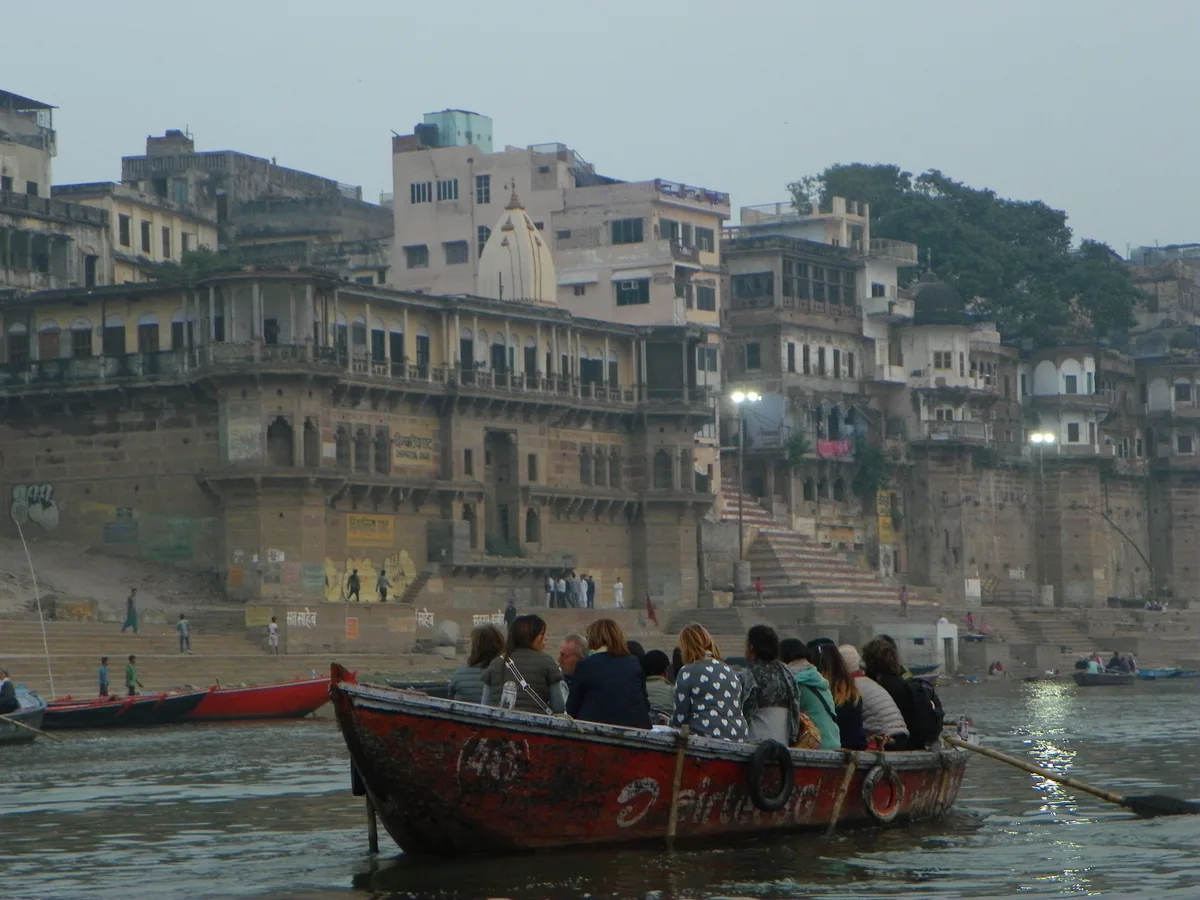
Boat rides: The Ganga is one of the safest spaces in Varanasi — the ghats are open, busy, and well-observed. Pre-booked boats with fixed fares (arrange through your hotel or Spirit of Kashi) are more predictable than accepting offers from random boatmen at the ghat. Sunrise and morning rides are the safest times; avoid solitary late-night boat rides.
Walking the ghats: The ghat promenade from Assi to Dashashwamedh is walkable in daylight and is active with pilgrims and tourists at all hours. It is probably the safest walking route in the city — open, visible, and populated.
The old city lanes: Best navigated with a guide or with a clear destination in mind. Getting lost in the lanes is disorienting and can attract unwanted approaches. During the day, lanes are busy and manageable. After dark, navigate only to a specific known destination.
Practical Safety Tips That Actually Help
Firm, confident refusal: The most effective tool in dealing with unwanted approaches is a clear, direct refusal without explanation or prolonged engagement. 'No, thank you' — said once, firmly — and then walking away is consistently reported by experienced travellers as the most effective response. Hesitation or prolonged engagement tends to extend the encounter.
The SIM card advantage: A working Indian SIM (with Ola, Uber, Google Maps, WhatsApp) is the single most practical safety enhancement for any solo traveller in India. Get a local SIM at the airport or in the city.
Share your location: India's messaging apps make it easy to share your real-time location with a trusted contact — use this when moving to unfamiliar areas.
Know where your hotel is: In the old city's lanes, even experienced travellers get disoriented. Have your hotel's phone number saved, know roughly which ghat is nearest, and confirm the route back before going deep into unfamiliar lanes.
Trust your instincts: If a person, place, or situation feels wrong, it probably is. Varanasi's spiritual atmosphere can create pressure to see everything as cosmically benign — this is not always useful when your gut is signalling discomfort.
Frequently Asked Questions
Is Varanasi safe for solo female travellers?▼
Varanasi is manageable and widely visited by solo women, but it requires more awareness than many tourist destinations. The great majority of interactions are positive or neutral; unwanted attention (comments, persistent approaches) is common, particularly for foreign women in the old city; threatening situations are rare with reasonable precautions. Thousands of women travel here solo every year — domestic pilgrims, international backpackers, spiritual seekers. Preparation and realistic expectations make the difference between an overwhelming and a rewarding trip.
What is the best time of year for a solo female trip to Varanasi?▼
October–March is the recommended season for all Varanasi visitors — the weather is comfortable (15–25°C), the major festivals are in this window (Dev Deepawali, Mahashivratri), and the tourism infrastructure is fully active. Avoid April–June (extreme heat) and the peak of the monsoon (July–August) when the city is both difficult logistically and more crowded with the Shravan pilgrimage season.