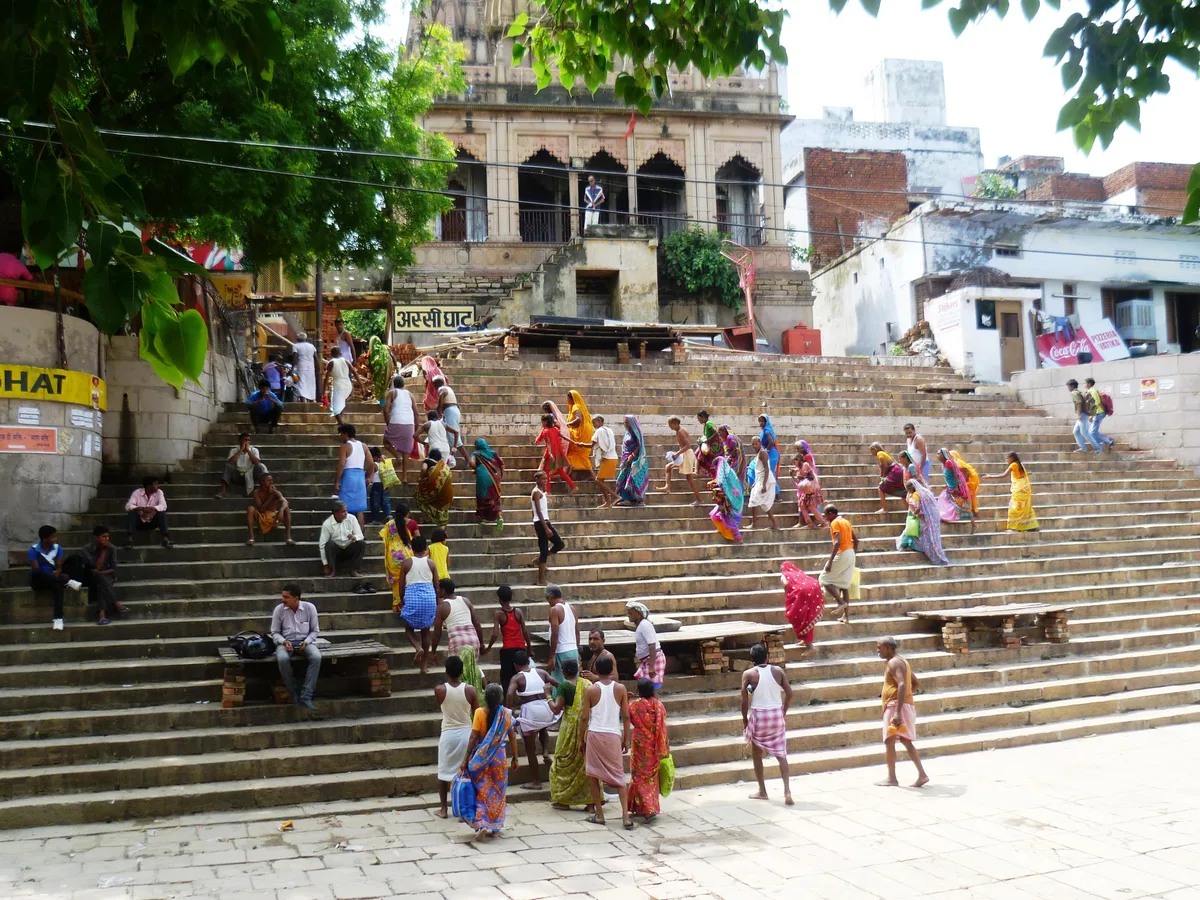
Assi Ghat Varanasi: The Travellers' Ghat at the Ganga's Southern End
The southernmost major ghat — where pilgrims, students, and travellers converge
Assi Ghat sits at the southern edge of Varanasi's famous ghat stretch, at the confluence of the Ganga and the small Assi river (now largely subterranean). It is simultaneously one of Varanasi's most sacred pilgrimage sites and its most cosmopolitan neighbourhood — home to the morning yoga gatherings, roadside cafes, and the long-stay international travellers who come to study Sanskrit, Hindustani classical music, or simply live within sight of the Ganga for months at a time.
The Sacred Significance of Assi Ghat
Assi Ghat's religious importance is rooted in ancient Vedic texts. The Kashi Khanda section of the Skanda Purana explicitly names it as one of Kashi's most sacred sites. The confluence of the Assi river and the Ganga here marks the southern boundary of the Panchakroshi Yatra — the traditional 88-kilometre circumambulation of Kashi that pilgrims complete over five days. Pilgrims performing this circuit begin and end at Assi Ghat.
The most sacred object at the ghat is a large Shiva lingam beneath a peepal tree near the water's edge. This lingam — known as Asi Sangameshvara — is among Varanasi's most revered and receives offerings from pilgrims throughout the day. The peepal tree itself is considered sacred in Hinduism and adds to the atmospheric quality of the spot.
Subah-e-Banaras: The Morning Gathering
Every morning at sunrise, Assi Ghat hosts a distinctive morning programme called Subah-e-Banaras ('Morning of Varanasi'). Priests perform a smaller version of the Ganga Aarti at dawn. Yoga practitioners gather on the stone steps. Musicians sometimes play Indian classical instruments. The overall atmosphere — Ganga mist, temple bells, chanting, and the sun rising over the far bank — creates what many visitors describe as the most serene experience in Varanasi.
This dawn gathering is particularly popular with long-stay visitors and students of Banaras Hindu University (BHU), whose campus is a short walk from the ghat. BHU is one of Asia's largest residential universities and has been sending students to study and meditate at Assi Ghat since its founding in 1916.
Assi Ghat's Unique Neighbourhood
More than any other ghat, Assi has developed a neighbourhood culture that extends well beyond the steps and the water. The road running parallel to the ghat is lined with guesthouses, cafes serving filter coffee and Western breakfasts alongside chai, used bookshops stocked with Sanskrit texts and travel writing, and small restaurants catering to the international community.
This has made Assi Ghat the de facto headquarters for long-term travellers in Varanasi — those spending weeks or months studying, practising yoga, learning sitar or tabla, or simply absorbing the city at their own pace. The area is significantly calmer than central Varanasi but still deeply Hindu in character, with temples, vendors, and the rhythm of pilgrimage life always present.
Festivals and Seasonal Events at Assi Ghat
Assi Ghat has its own distinctive festival calendar. During Holi, the ghat becomes the gathering point for Varanasi's most exuberant colour celebration — the 'Rang Barse' morning on Holi day draws enormous crowds for singing, dancing, and playing with colours, with sadhus and regular devotees mixing in a uniquely Banarasi atmosphere.
On Kartik Purnima (full moon of the month of Kartik, typically November), the ghat is illuminated with thousands of diyas as part of the city-wide Dev Deepawali celebration. During Mahashivratri, an all-night vigil is held at the ghat. The ghat also has a smaller Ganga Aarti each evening, separate from the main Dashashwamedh ceremony — less elaborate but more intimate.
Frequently Asked Questions
How far is Assi Ghat from Dashashwamedh Ghat?▼
Approximately 3 kilometres by road, or about 30–40 minutes on foot along the riverfront (passing 20+ ghats along the way). By auto-rickshaw, it's roughly 10–15 minutes. Many visitors walk the ghat stretch from Assi to Dashashwamedh as a rewarding morning or afternoon activity.
Is Assi Ghat good for the morning yoga and meditation experience?▼
Yes — Assi Ghat is the most popular ghat for morning yoga in Varanasi. Groups gather on the steps from around 5:30 AM. Many guesthouses and yoga schools in the neighbourhood offer structured morning yoga and meditation programmes. For independent practitioners, the ghat steps and the area around the Shiva lingam are accessible to all.
What is the best area to stay for Assi Ghat?▼
The road immediately behind and parallel to Assi Ghat (Assi Ghat Road) has the highest concentration of guesthouses and small hotels suited to longer stays. The area is walkable to the ghat, quieter than central Varanasi, and has the best cafe and restaurant options for independent travellers.