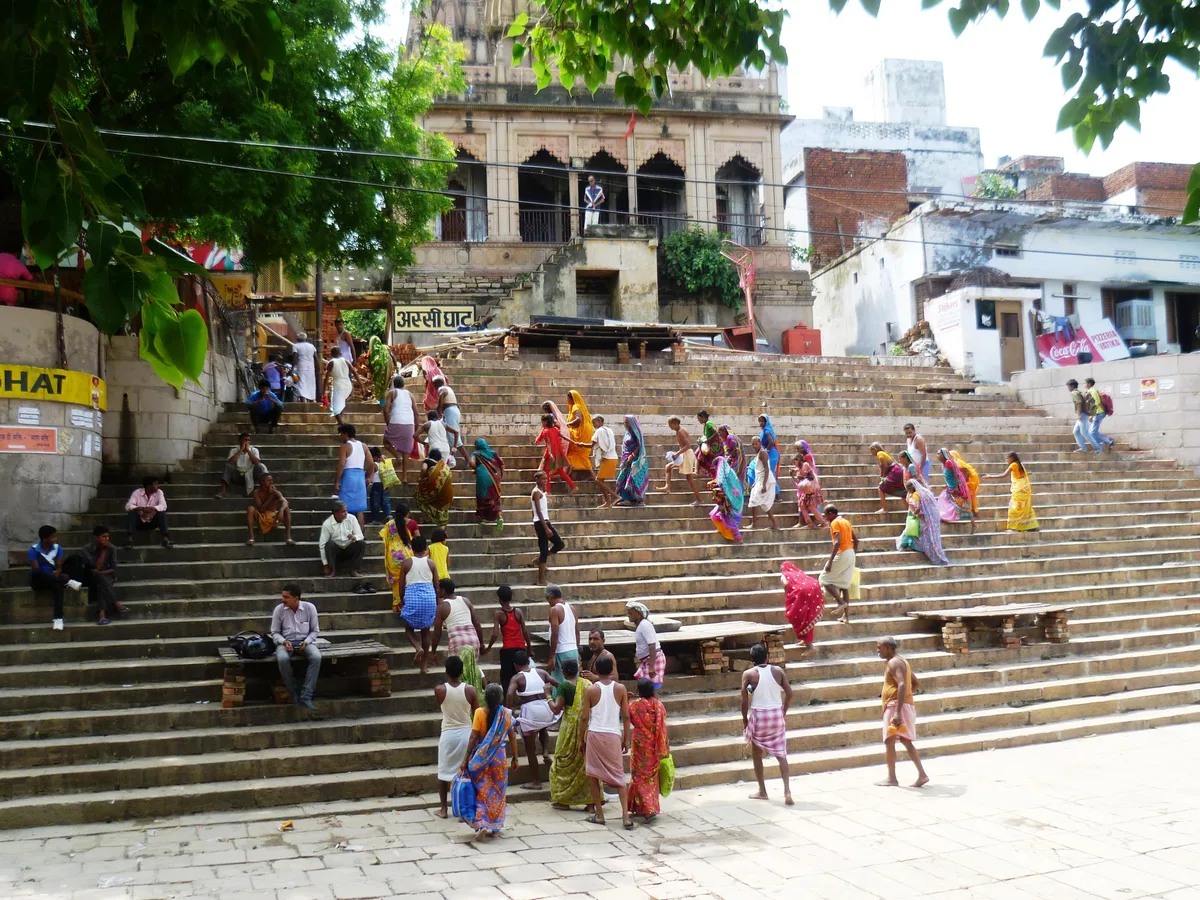
Subah-e-Banaras: The Morning Experience at Assi Ghat
Varanasi wakes up at Assi Ghat — music, yoga, prayer, and the Ganga at first light
Subah-e-Banaras (the 'Morning of Banaras') is the name given to the distinctive morning cultural life of Assi Ghat — the southernmost of the main Varanasi ghats, and the most beloved ghat of the old city's intellectual, artistic, and spiritual community. Every morning at Assi, before dawn, a world assembles: yogis in their practice, pandits performing sandhyavandana (morning prayers), classical musicians gathering for dawn ragas, boatmen pushing out their craft, and pilgrims bathing in the Ganga with the growing light turning the river gold. The phrase 'Subah-e-Banaras' captures this entire morning atmosphere — it has become the essential experience of what Varanasi is, at its most authentic.
What Happens at Assi Ghat in the Morning
The morning at Assi Ghat begins well before sunrise — typically around 4:30–5:00 AM. By the time the sun breaches the horizon over the flat eastern bank of the Ganga, the ghat is already fully alive:
Sandhyavandana: The morning prayer ritual performed at the water's edge by Brahmin pandits — a precisely ordered sequence of mantras, water offerings, and prostrations to the rising sun. This ancient practice, virtually unchanged for thousands of years, is performed quietly at the water's edge.
Yoga and meditation: Assi Ghat is the yoga capital of Varanasi. Multiple teachers and groups practise in the open air on the ghat steps in the early morning — everything from traditional Hatha yoga to more contemporary styles. The backdrop of the Ganga, the sounds of prayer and birdsong, and the cool morning air make this an extraordinary context for practice.
Morning music: Assi Ghat has a long association with Varanasi's classical music community. Impromptu morning music sessions — a sitar, a tabla, a sarangi — occur organically on the ghat. These are not performances for tourists but genuine practice sessions that happen to occur in a public space.
The Ganga at sunrise: Between 6:00 and 7:30 AM, the light on the Ganga changes from silver to gold to warm orange — one of the most photographed effects in India. The reflections in the still water, the boats passing, and the temple silhouettes on the western bank create an image that defines 'Varanasi' in the visual imagination.
The Assi Ghat Morning Sabha
Assi Ghat has a long tradition of being a meeting place for Varanasi's intellectual and cultural community — scholars, musicians, poets, and teachers who gather at the ghat for conversation and debate. This tradition, sometimes called the 'ghat sabha' (ghat assembly), reflects Varanasi's status as India's most continuous centre of learning and discourse.
The conversations that happen at Assi Ghat in the morning — in Hindi, Sanskrit, and Bhojpuri — cover everything from philosophy and scripture to local politics and the latest films. For visitors who understand Hindi, sitting near these groups is a direct entry into the intellectual life of the city. For those who don't, a guide can translate and contextualise.
How to Experience Subah-e-Banaras
To experience Subah-e-Banaras authentically, arrive at Assi Ghat before sunrise — ideally between 5:00 and 5:30 AM. The ghat is reached easily on foot from the old city lanes, by auto-rickshaw, or by boat from any of the northern ghats (a boat approach to Assi at dawn is itself one of the most beautiful ways to arrive).
Stay for at least two hours — the experience builds from the quiet pre-dawn arrivals to the full morning activity, and leaving too soon means missing the best light and the most activity.
Do not approach or photograph morning prayers or meditation sessions without permission. The ghat is a sacred space and the people using it are not there for tourist observation — they are continuing unbroken daily practices. Observe with discretion.
If you are interested in joining a morning yoga session, Assi Ghat has numerous teachers who offer classes — some specifically designed for visitors. Arrange in advance through your hotel or Spirit of Kashi.
Frequently Asked Questions
What time does Subah-e-Banaras start at Assi Ghat?▼
Activity at Assi Ghat begins before dawn — typically 4:30–5:00 AM. The most atmospheric period is the 90 minutes around sunrise (approximately 6:00–7:30 AM, varying by season). Arriving at 5:00 AM allows you to experience the transition from pre-dawn quiet to full morning activity.
Is Assi Ghat the only ghat with this morning culture?▼
Assi Ghat is the most famous for its morning cultural life and has the strongest tradition of being a gathering place for Varanasi's intellectual and artistic community. Other ghats also have strong morning atmospheres — Dashashwamedh has the sunrise boat community and temple activity, Kedar Ghat has a quieter, more devotional morning character. A sunrise boat ride allows you to experience multiple ghats in sequence.