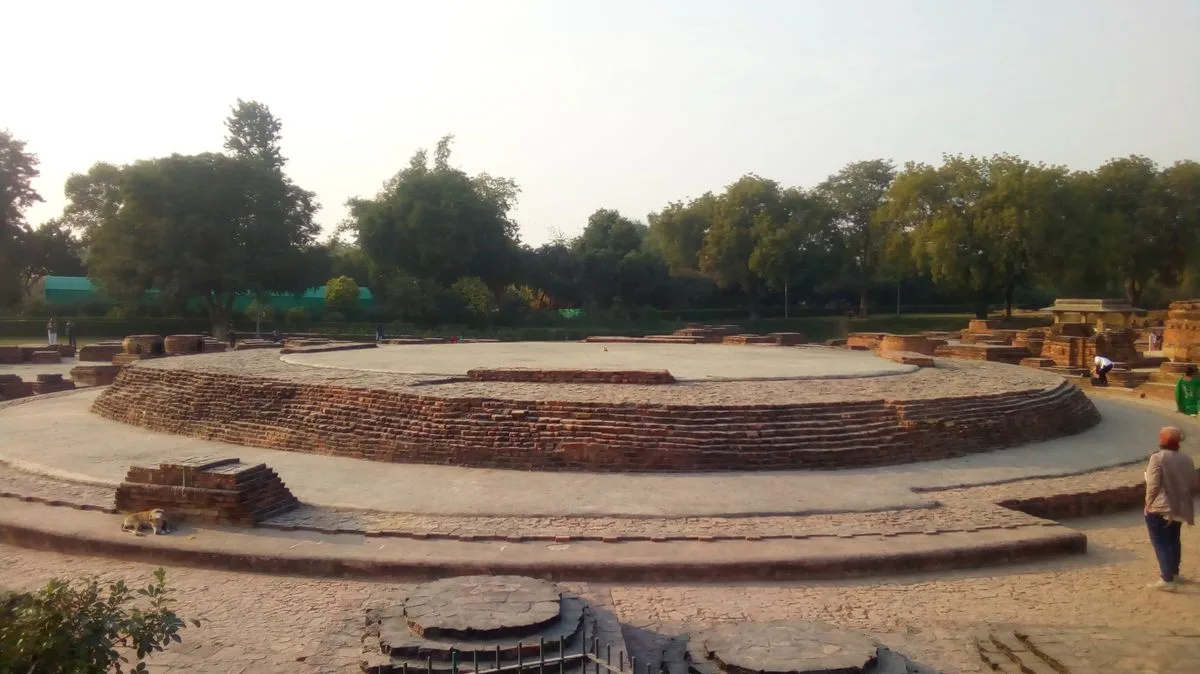
Sarnath Day Trip from Varanasi: How to Visit, Transport & Timing
Eleven kilometres and 2,500 years — the practical guide to visiting Sarnath from Varanasi
Sarnath is the most significant Buddhist site in India after Bodh Gaya, and it is 11 kilometres from Varanasi city centre. Most visitors combine it with their Varanasi trip as a half-day or full-day excursion — but how you structure the day matters. The Sarnath Archaeological Museum is the centrepiece (it holds the original Lion Capital of Ashoka, India's national emblem, and some of the finest Buddhist sculpture in the world), and it closes on Fridays. The Dhamek Stupa and the deer park are always open. This guide covers the practical logistics: how to get there, when to go, how long to spend, and how to fit Sarnath into a Varanasi itinerary.
How to Get from Varanasi to Sarnath
Sarnath is 11 km from the Godaulia area and 13 km from Assi Ghat. There are several transport options.
Pre-paid taxi / app cab: The most comfortable option. Pre-paid taxis are available from the prepaid counter near Varanasi Junction station; Ola and Uber both operate to Sarnath. A one-way fare is typically ₹300–500 depending on departure point and traffic. Return taxi can be arranged with the driver directly (agree before you leave) or called via app from Sarnath. Journey time: 30–50 minutes depending on traffic.
Auto-rickshaw: A slightly less comfortable but practical option for independent travellers. Negotiate a return fare before departure — a full round-trip with waiting time at Sarnath (2–3 hours) is a reasonable arrangement. Agree on an hourly waiting charge or a flat fee for the return. Journey time similar to taxi.
Tempo (shared vehicle): Shared tempos (large auto-rickshaws) run between specific Varanasi landmarks and Sarnath from the Varanasi Cantt area. Cheapest option; takes longer due to stops and requires knowing the correct departure point. Best for independent budget travellers who have been in Varanasi a few days and are comfortable with the city.
Local train: Varanasi to Sarnath station by local train is an option but requires coordination with train timing and adds total journey time significantly. Not recommended for a half-day excursion.
Best Time to Visit Sarnath
The Sarnath Archaeological Museum is open Tuesday–Sunday, 10:00 AM–5:00 PM. It is closed on Fridays and national holidays. If visiting on a Friday, you can still see the Dhamek Stupa, the deer park, the Buddhist temples, and the Mulagandhakuti Vihara — but you cannot enter the museum.
For the best experience with manageable crowds, visit on a Tuesday, Wednesday, or Thursday morning — arriving at the museum when it opens at 10:00 AM. Weekends bring more domestic visitors; the atmosphere is still manageable but the museum and stupa area are busier.
For combination with Varanasi activities: the most common approach is to spend the morning in Varanasi (sunrise boat + breakfast), leave for Sarnath by 10:00–10:30 AM, spend 3–4 hours at Sarnath, and return to Varanasi by 2:30–3:00 PM for the afternoon and evening activities. Alternatively, an early morning departure allows you to reach Sarnath before the crowds and return by midday.
Sarnath in winter (November–February) is pleasant — comfortable temperatures, clear light. Avoid the peak of summer (May–June).
How Long to Spend at Sarnath
Minimum meaningful visit: 2 hours. This covers the Dhamek Stupa and the Archaeological Museum at a reasonable pace.
Comfortable half-day: 3–4 hours. This allows the museum, the Dhamek Stupa, the deer park at leisure, and a visit to at least one of the international Buddhist temples (Thai, Japanese, Tibetan, Sri Lankan).
Full day: 5–6 hours. This unlocks all the international temples in depth, a more contemplative pace at the stupa and deer park, time for the Mulagandhakuti Vihara murals, and a proper sit in the garden.
The Sarnath archaeological site covers a compact area that can be walked entirely — most sites are within 10 minutes' walk of each other.
What to See at Sarnath: Suggested Order
Begin at the Sarnath Archaeological Museum (open from 10:00 AM). The most important piece is the original Lion Capital of Ashoka — a 3rd-century BCE polished sandstone sculpture of four lions on an abacus carved with animals and a Dharma chakra. This is the same design as the national emblem of India. The museum also holds extraordinary Gupta-period (4th–6th century CE) Buddha statues with an expression of refined serenity unmatched in Buddhist art elsewhere.
After the museum, walk to the Dhamek Stupa. The stupa dates from the 5th–6th century CE and marks the exact spot where the Buddha delivered the Dhammacakkappavattana Sutta — the first teaching of his ministry, on the nature of the Middle Way and the Four Noble Truths. The carved geometric band around the drum of the stupa, in a style typical of Gupta decorative art, is particularly fine. Circumambulate the stupa (clockwise, as is the Buddhist custom) at least once.
The deer park surrounds the stupa — today home to actual deer, which adds an appropriate quality to a site whose name means 'the place of deer.' Sit here for 20–30 minutes before moving on.
Mulagandhakuti Vihara: A 1930s temple built by the Mahabodhi Society, with murals depicting the life of the Buddha painted by Japanese artist Kosetsu Nosu. The murals are narrative and detailed; the interior is quiet and shaded.
International temples: The Thai, Tibetan, Japanese, and Sri Lankan temples surrounding the main site each represent a distinct Buddhist architectural tradition. They vary in atmosphere from devotional to ornate to austere. The Tibetan monastery, set slightly apart from the tourist concentration, is particularly peaceful.
Fitting Sarnath into Your Varanasi Itinerary
1-day Varanasi visit: Sarnath does not fit. The 1-day plan is at capacity with the sunrise boat, Kashi Vishwanath, old city walk, and Ganga Aarti. Skip Sarnath or replace the old city afternoon walk with a 2-hour Sarnath visit (choosing between the two is a genuine trade-off).
2-day Varanasi visit: Sarnath fits on Day 2 afternoon if you are willing to drop the southern temple circuit (Durga Temple, Sankat Mochan). The two cannot both fit comfortably in a single afternoon.
3-day Varanasi visit: The classic placement is Day 2 afternoon (after Kashi Vishwanath and old city in the morning). This is the recommended structure for first-time visitors.
5-day Varanasi visit: Give Sarnath a full day (Day 3) rather than a compressed afternoon. This allows the museum, all the temples, and the deer park at leisure — a very different experience from the rushed version.
Combining with Bodh Gaya: Bodh Gaya (where the Buddha attained enlightenment) is 240 km from Varanasi — a 4–5 hour drive. It is a separate multi-day trip, not a day excursion from Varanasi.
Frequently Asked Questions
Can I visit Sarnath without a guide?▼
Yes — Sarnath is compact and well-labelled. The museum has clear signage in English. The stupa and deer park are self-explanatory. Independent visitors do fine. However, a guide adds significant value for the museum specifically: the historical context of the Lion Capital, the iconographic programme of the Gupta-period sculptures, and the broader story of Buddhism's development in India are much richer with narrative. A half-day guide focused on Sarnath is a worthwhile investment for visitors with a strong interest in Buddhist history.
Is Sarnath worth visiting if I'm not Buddhist?▼
Yes. Sarnath is worth visiting for its archaeological and historical significance regardless of religious interest. The Lion Capital in the museum is one of the most important surviving artefacts from ancient India — the design is on every Indian passport, every government seal, every rupee note. The Gupta-period sculpture in the museum is among the finest stone carving produced anywhere in the ancient world. For any traveller interested in Indian history, art, or archaeology, Sarnath is a non-optional stop.