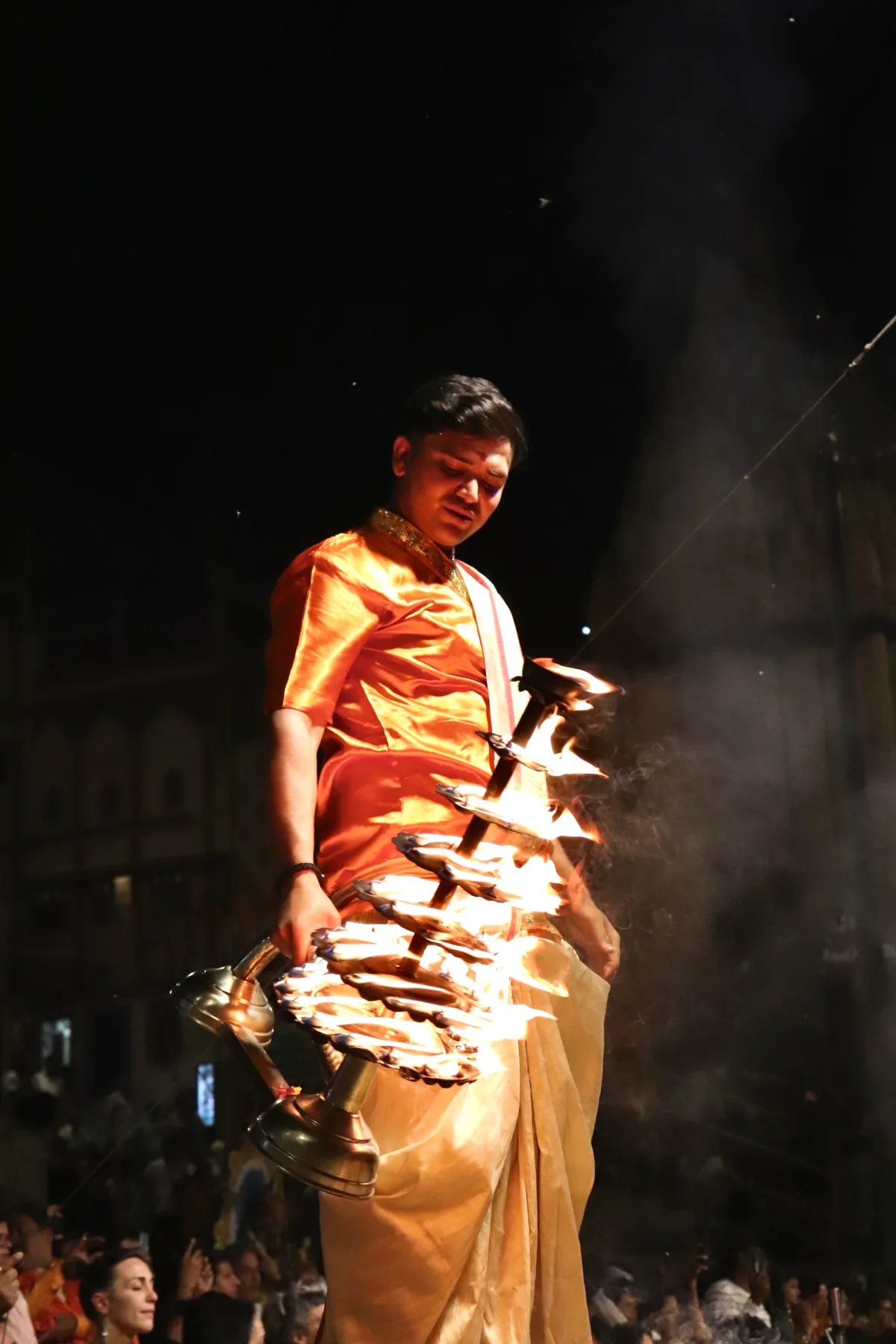
Chhath Puja Varanasi: The Sun Festival at the Ghats
Chhath — the ancient sun festival where devotees stand in the Ganga and offer light to the sky
Chhath Puja is one of the most ancient and visually powerful Hindu festivals — and one of the most distinctly Varanasi. Observed on the sixth day after Diwali (Kartik Shashti), the festival is dedicated to Surya Devata (the Sun god) and Chhathi Maiya (the sixth-day goddess). The festival spans four days and culminates in two unforgettable rituals: the evening arghya (offering to the setting sun) and the morning arghya (offering to the rising sun) — both performed by devotees standing knee-deep in the Ganga water, facing the horizon, holding offerings of fruit and sugarcane aloft.
The Meaning and Origins of Chhath
Chhath Puja is among the oldest surviving Vedic festivals in India — with direct roots in the Vedic tradition of sun worship. The festival is particularly associated with the Bhojpuri-speaking cultural region — the area centred on Varanasi, Patna, and the Bhojpuri heartland of eastern Uttar Pradesh and Bihar. In this cultural zone, Chhath is not merely an annual festival but the defining community celebration of the year, comparable in emotional significance to the most important regional festivals elsewhere in India.
The festival is distinctly non-Brahminical in its structure — there is no priest involved, no temple visit required, and the rituals are performed directly by the worshipper. This democratising element, combined with the Vedic antiquity of sun worship, gives Chhath a character unlike any other major Hindu festival.
The Chhathi Maiya — the presiding goddess of the sixth day — is worshipped alongside Surya. She is understood as the Shakti (power) of the sun, and her grace is sought for fertility, longevity, and the well-being of children. The fast observed by Chhath devotees (Vratis) is among the most demanding in the Hindu festival calendar — up to 36 hours without water.
The Four Days of Chhath
Day 1 — Nahay Khay (Bathing and Eating): Devotees bathe in the Ganga early in the morning, bring the sacred water home, and cook a single meal of seasonal vegetarian food. The day marks the beginning of the vrat (fast).
Day 2 — Lohanda/Kharna: A full-day fast without water. In the evening, devotees break the fast with kheer (rice pudding with jaggery) and prasad that is shared with family and neighbours.
Day 3 — Sandhya Arghya (Evening Offering): The most visually spectacular moment. As sunset approaches, the ghats fill with thousands of devotees (Vratis) dressed in new saffron or yellow clothes, carrying bamboo baskets (daura) filled with offerings — fruits, sugarcane, coconut, and traditional sweets. The Vratis enter the Ganga and stand in the water facing the setting sun, holding the baskets aloft. The ghats are ablaze with earthen lamps and incense.
Day 4 — Usha Arghya (Morning Offering): Before sunrise, the Vratis return to the ghats and re-enter the water to offer arghya to the rising sun. This is the culminating ritual — the 36-hour nirjala fast (without water) ends after the offering at dawn.
Chhath at Varanasi's Ghats
Varanasi's ghats are the ideal setting for Chhath Puja — the wide stone steps leading into the Ganga provide natural standing space for thousands of devotees during the evening and morning arghya. Every ghat from Assi to Raj Ghat is used, but the most crowded locations are Dashashwamedh Ghat, Assi Ghat, Rajendra Prasad Ghat, and the stretch between Sheetla Ghat and Kedar Ghat.
For visitors and photographers, Chhath is one of the most visually dramatic events in the Varanasi calendar. The evening arghya — hundreds of saffron-clothed Vratis standing in the Ganga as the orange sunset fills the sky — offers some of the most powerful images Varanasi can provide. The morning arghya at sunrise has a quieter, more ethereal quality.
Photography during Chhath is generally tolerated, but visitors should observe from the ghat steps and periphery, not wade into the water or obstruct the Vratis. The ritual is deeply personal and sacred — quiet, respectful observation is essential.
Frequently Asked Questions
Can tourists attend Chhath Puja in Varanasi?▼
Yes — Chhath Puja is performed at open public ghats. Respectful visitors are welcome to observe. Arrive early for a good position on the ghat steps. Dress modestly, do not enter the water (reserved for the Vratis), observe quietly, and ask permission before taking close photographs of individuals.
What is the nirjala fast at Chhath?▼
The Chhath nirjala fast is a 36-hour fast without water or food, observed by Vratis from the evening of Kharna (Day 2) until the morning arghya to the rising sun on Day 4. It is considered one of the most demanding fasts in the Hindu calendar — and is observed by millions of people across the Bhojpuri cultural region.