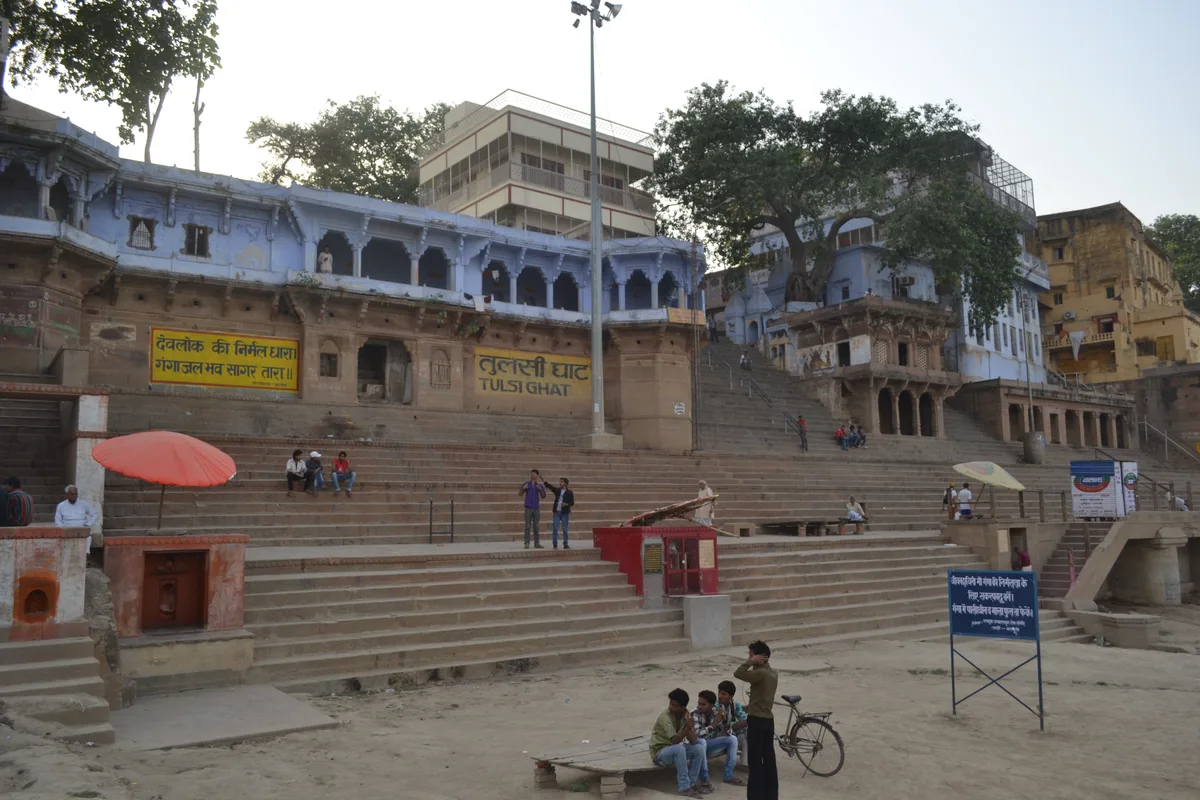
Tulsi Ghat Varanasi: The Ghat of the Poet-Saint Tulsidas
Named for Tulsidas — the 16th-century poet-saint who wrote the Ramcharitmanas at Kashi
Tulsi Ghat is one of Varanasi's most culturally significant ghats, carrying the name of Goswami Tulsidas — the 16th-century saint and poet who composed the Ramcharitmanas, the definitive Hindi retelling of the Ramayana. Tulsidas lived and worked in Varanasi, and this ghat and the surrounding area are associated with his life and devotional practice. The ghat is quieter than the central ghats, more traditional in character, and hosts one of Varanasi's most distinctive annual festivals.
Goswami Tulsidas and the Ramcharitmanas
Goswami Tulsidas (1532–1623) is one of the greatest poet-saints in the tradition of Bhakti (devotional) Hinduism. His Ramcharitmanas — a retelling of the Sanskrit Ramayana in the Awadhi (Old Hindi) language — made the story of Lord Rama accessible to ordinary people across northern India for the first time, at a period when Sanskrit was restricted to the educated elite.
The Ramcharitmanas remains one of the most widely read and recited texts in the Hindi-speaking world, five centuries after it was written. Tulsidas is also revered as a great devotee of Hanuman, and is credited with writing the Hanuman Chalisa — the 40-verse hymn to Hanuman that is one of the most chanted texts in Hinduism.
Tulsidas lived at various locations in Varanasi. The Tulsi Manas Temple in the Durga Kund area is built on the site traditionally associated with his writing of the Ramcharitmanas. Tulsi Ghat bears his name due to his presence and practice in the area.
Nag Nathaiya: The Annual Festival
Tulsi Ghat is the site of the Nag Nathaiya festival — one of Varanasi's most distinctive and visually striking annual events. Held on the Kartik Purnima full moon (typically November), the festival commemorates the story of the young Krishna subduing the serpent Kaliya in the Yamuna River.
The performance takes place on decorated boats on the Ganga in front of Tulsi Ghat. A young boy dressed as Krishna dances on a multi-headed serpent figure (representing Kaliya) on the boat, as devotional music plays and fireworks illuminate the riverfront. Thousands of spectators fill the ghat steps and the riverfront. The entire event is both a theatrical performance and a devotional act.
The festival has been celebrated at this ghat for over four centuries and remains one of Varanasi's most authentic traditional events — less commercialized than some of the more tourist-oriented celebrations.
The Ghat Today
Tulsi Ghat is located in the southern section of the ghat stretch, between Assi Ghat and Harishchandra Ghat. Its character is traditional and relatively quiet compared to the central ghats. A Hanuman temple at the ghat honours Tulsidas's particular devotion to Hanuman. The surrounding neighbourhood has maintained its character — local residents and pilgrims rather than tourist facilities dominate.
For visitors who have already experienced the central ghats (Dashashwamedh, Assi) and want to explore beyond, the southern ghat stretch from Assi to Harishchandra — passing Tulsi, Kedar, and Harishchandra — offers a more immersive, less curated experience of Varanasi's religious life.
Frequently Asked Questions
Can I watch the Nag Nathaiya festival at Tulsi Ghat without a ticket?▼
Watching from the ghat steps is free. For the best view of the boat performance, a boat position on the river is ideal — these can be arranged through Spirit of Kashi or directly at the ghat. The festival draws very large crowds, so arriving 2–3 hours early for ghat-side viewing is advisable.
Is Tulsi Ghat worth visiting outside of the festival season?▼
Yes — Tulsi Ghat offers a more authentic, unhurried experience of ghat life than the central ghats. Without the tourist concentration of Dashashwamedh, you observe local devotees, morning bathers, puja rituals, and fishing boats in a more natural environment. It combines well with a walk along the southern ghats.