Ayodhya to Varanasi: The Ram Mandir to Kashi Pilgrimage Route
Lord Rama's birthplace to Lord Shiva's city — the most powerful pilgrimage circuit in North India
Ayodhya and Varanasi sit at the heart of two of Hinduism's most sacred narratives. Ayodhya — the birthplace of Lord Rama, now home to the magnificent Ram Mandir — and Varanasi (Kashi) — the city of Lord Shiva, home to the Kashi Vishwanath Jyotirlinga, where liberation is said to be granted to all who die here. The two cities are approximately 200 kilometres apart, and combining them in a single pilgrimage journey has become one of the most sought-after spiritual experiences in India since the Ram Mandir consecration in January 2024.
By Train: Ayodhya to Varanasi (4–5 Hours)
Ayodhya has a railway station at Faizabad Junction (FD) — the main railhead for the Ayodhya area, located approximately 6 km from the Ram Mandir. A dedicated Ayodhya Dham station (AY) has been developed in recent years closer to the Ram Mandir area.
Trains from Faizabad/Ayodhya to Varanasi take approximately 4–5 hours. Some trains go via Lucknow, while direct services run through eastern Uttar Pradesh. Check IRCTC for current schedules — the Ayodhya–Varanasi route has seen improved connectivity with more trains added after the Ram Mandir consecration brought significantly higher visitor numbers.
Alternatively, the route from Ayodhya to Varanasi via Lucknow Junction adds 1–2 hours but gives access to the large number of Lucknow–Varanasi trains that run daily.
By Road: Ayodhya to Varanasi
The road distance from Ayodhya to Varanasi is approximately 200 km. Journey time by private car or taxi is 3.5–5 hours depending on route and traffic. Two main routes:
Via Sultanpur (more direct): NH27 eastward toward Varanasi, passing through Sultanpur. Approximately 200 km.
Via Lucknow: Longer but uses better roads (the Lucknow–Varanasi expressway section). Total distance approximately 330 km but faster road quality.
Bus services connect Ayodhya and Varanasi via Sultanpur, though private transport is more comfortable and flexible for pilgrimage-focused travel.
The Ayodhya + Kashi Pilgrimage Circuit
The combination of Ram Mandir at Ayodhya and Kashi Vishwanath at Varanasi represents the two most significant pilgrimage shrines in the Hindi-speaking Hindu heartland. Since the consecration of the Ram Mandir in January 2024, the Ayodhya + Kashi circuit has become one of the most popular pilgrimage combinations in India.
A complete Ayodhya + Kashi circuit structure: Day 1 — arrive Ayodhya, Ram Mandir darshan, Saryu Ghat evening aarti. Day 2 — Ayodhya exploration (Hanuman Garhi, Kanak Bhawan), travel to Varanasi afternoon. Day 3 — Varanasi: sunrise boat ride, Kashi Vishwanath darshan. Day 4 — old city heritage walk, Ganga Aarti, departure.
Spirit of Kashi offers the Ayodhya + Kashi Tour — a 3-day guided experience covering both sacred cities, with local expert guides at both destinations, transport between cities arranged, and the spiritual context of both pilgrimage sites explained by knowledgeable local guides. Enquire via WhatsApp to discuss customisation for your group.
What to Expect in Varanasi After Ayodhya
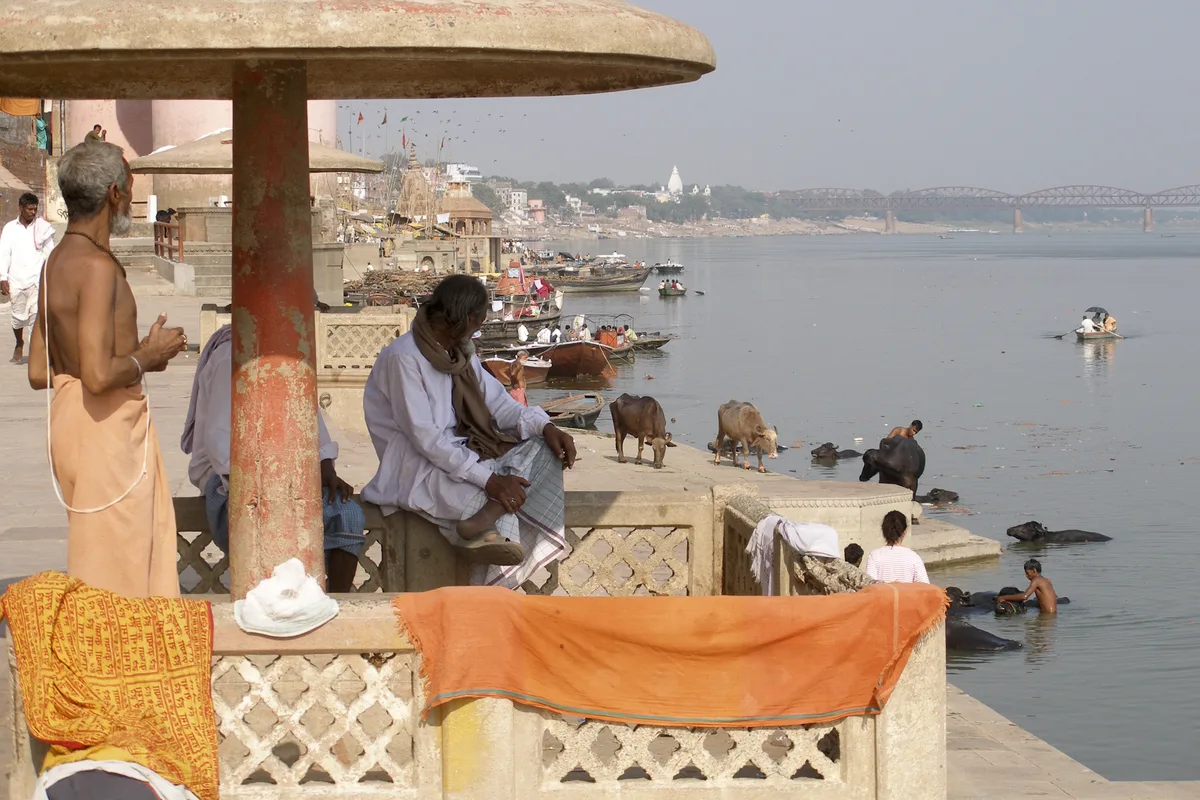
Arriving in Varanasi from Ayodhya, many pilgrims find the character of the two cities strikingly different. Ayodhya — particularly post-2024 — is a newly developed pilgrimage city with a wide main approach to the Ram Mandir, clean roads, and infrastructure built for large visitor volumes. Varanasi is ancient, dense, and deliberately difficult: the old city lanes are medieval in scale, the ghats are worn by millennia of use, and the city has a spiritual intensity that resists modernisation.
The two cities complement each other as pilgrimage experiences: Ayodhya offers the grandeur of the new Ram Mandir, and Varanasi offers the continuity of ancient practice. Together, they represent the two most important masculine divine figures in the Hindu pantheon — Rama and Shiva — in the two holiest cities of Hinduism's North Indian tradition.
On arrival in Varanasi, prioritise a sunset at the ghats on your first evening — letting the city's atmosphere settle in before beginning the temple visits the following morning.
Frequently Asked Questions
How long should I spend on an Ayodhya and Varanasi combined trip?▼
A minimum of 4 days — 2 in Ayodhya (Ram Mandir darshan, Saryu Ghat, Hanuman Garhi) and 2 in Varanasi (Kashi Vishwanath, sunrise boat, Ganga Aarti). For a more relaxed experience, 5 days is better — 2 nights in Ayodhya, 3 nights in Varanasi. This allows time in Varanasi for Sarnath and a heritage walk without rushing.
Does Spirit of Kashi have a tour that covers both Ayodhya and Varanasi?▼
Yes — Spirit of Kashi offers the Ayodhya + Kashi Tour, which covers both sacred cities with expert local guides at each destination, transport between cities included, and the itinerary structured around pilgrimage priorities. Enquire via WhatsApp to discuss the dates and group size.