Scindia Ghat Varanasi: The Ghat with the Sunken Temple
A Maratha palace ghat with a Shiva temple slowly surrendering to the Ganga
Scindia Ghat is one of Varanasi's most dramatic and photographed spots — not for ceremonies or pilgrimages, but for a single arresting image: a Shiva temple built in the 19th century that has been slowly sinking into the River Ganges and now leans at a pronounced angle, its base submerged, a visible testament to the power of the sacred river and the passage of time. The ghat was built by the Maratha Scindia royal family and is located in the northern section of the ghat stretch.
The Sunken Temple: How It Happened
The ghat and its associated Shiva temple were built in 1830 by Maharani Baija Bai Scindia, a prominent figure of the Maratha Scindia royal family. The construction was elaborate and ambitious — a palace-style structure with ornate stonework and a river-facing temple.
Over the following decades, the combined weight of the massive ghat structure and the seasonal flooding of the Ganga gradually undermined the foundations of the Shiva temple closest to the waterline. The temple began to tilt and sink — and has continued to do so ever since. Today it leans dramatically, its lower portion submerged in the river for much of the year. During the high-water monsoon months (July–September), the submerged portion is even deeper underwater.
Rather than being demolished, the temple has been left as it stands — in Hindu tradition, a submerged sacred structure retains its sanctity and may even acquire additional spiritual power from its immersion in the sacred Ganga. Rituals and offerings continue to be made at the accessible upper portions.
Photography and the Ghat Atmosphere
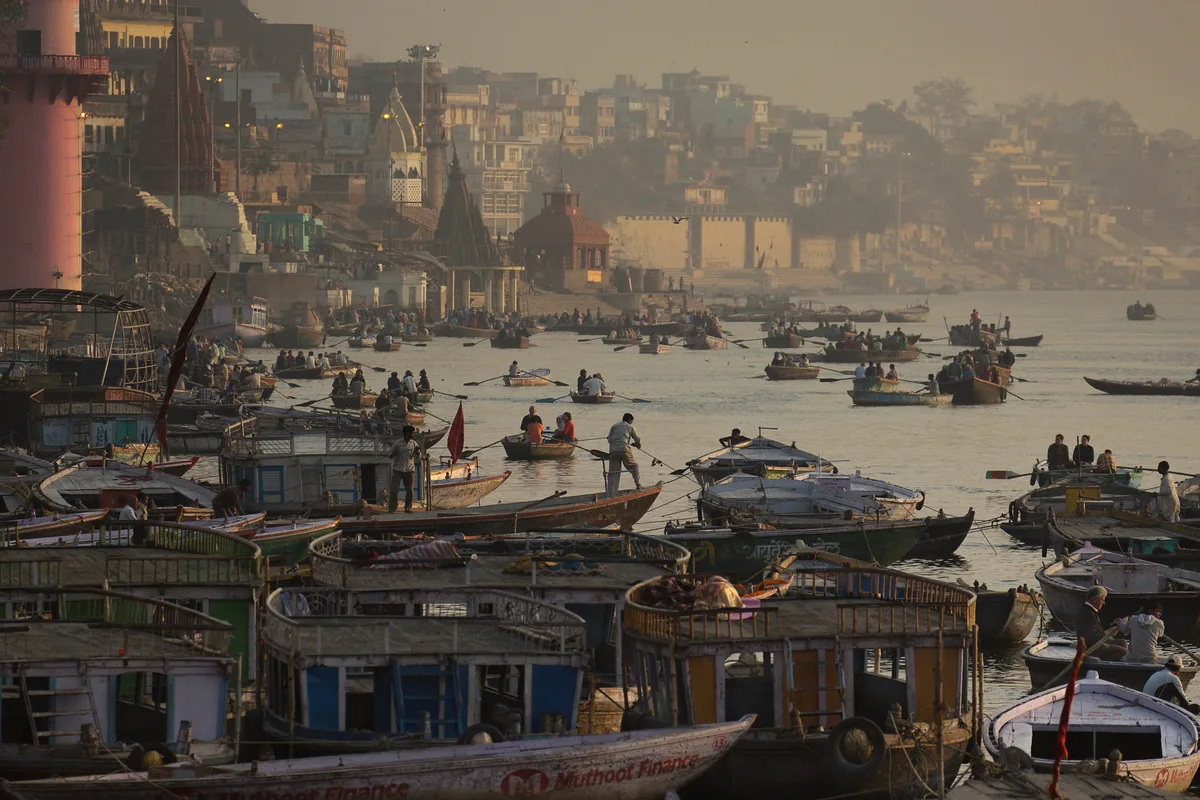
Scindia Ghat is one of Varanasi's most rewarding photography locations, particularly from a boat on the river. The combination of the tilting temple, the multi-tiered ghat architecture, the stone steps, and the reflections on the water makes for a striking composition at any time of day.
The best light for photography is in the early morning, when the sun illuminates the eastern face of the ghat and temple, and during the golden hour before sunset. The ghat is less crowded than Dashashwamedh or Manikarnika, giving photographers more space and freedom of movement.
The ghat is located between Panchganga Ghat to the north and Mir Ghat to the south. Walking this section of the riverfront — away from the central tourist concentration — gives a very different, quieter perspective on Varanasi's ghat life.
Frequently Asked Questions
Can you enter the sunken temple at Scindia Ghat?▼
The accessible upper portion of the temple can be approached. The submerged lower section is inaccessible, obviously. During low-water season (October–April), more of the temple structure is above water and can be seen from close range. During monsoon season, much of it is submerged.
Is Scindia Ghat worth visiting if you are not doing a photography tour?▼
Yes — the sunken temple is genuinely striking in person, and the quieter character of this section of the ghats offers a more contemplative experience than the crowded central ghats. It combines well with a visit to Panchganga Ghat nearby, making the northern section a rewarding half-day walk.