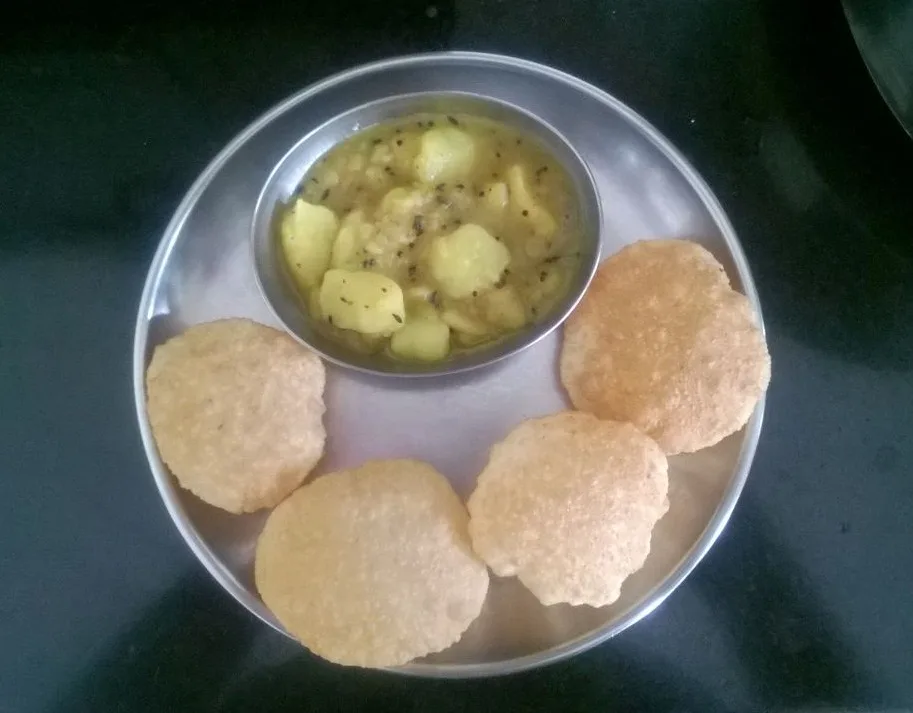
Banarasi Kachori Sabzi: Varanasi's Iconic Breakfast
The breakfast that has defined mornings in Varanasi for generations
If there is one dish that captures the spirit of a Varanasi morning, it is kachori sabzi. The kachori — a flaky, deep-fried pastry stuffed with a spiced paste of urad dal (black lentils) — arrives puffed and crisp. Alongside comes the sabzi: a dry, fiery potato curry made with mustard seeds, turmeric, cumin, green chilli, and a dozen other spices. Together, eaten on a leaf plate (pattal) or in a small bowl near the ghats before the sun gets high, this is one of India's most satisfying meals.
What Makes the Banarasi Kachori Different
Kachori exists across north India, but the Banarasi version has specific qualities that distinguish it. The outer pastry is made with refined flour (maida), fried in mustard oil at precise temperature — producing a shell that is both shattering-crisp and slightly flaky, without the greasiness of poor execution. The stuffing (pithi) uses urad dal that has been soaked, ground, and then fried with a very specific spice combination — including hing (asafoetida), fennel, and sometimes dried mango powder — giving it a depth of flavour unique to Varanasi preparation.
The sabzi that accompanies the kachori is a dry or semi-dry potato preparation that uses a higher ratio of whole spices than most north Indian sabzis, and a generous hand with green chillies. The spice level is characteristically Banarasi — assertive and unapologetic, intended to wake you up alongside the morning tea.
Where to Eat Kachori Sabzi in Varanasi
The best kachori sabzi is found at dedicated stalls near the main ghats and in the lanes of old Varanasi, where vendors have been serving the same recipe for generations. The breakfast rush typically runs from 6:00 AM to 10:00 AM, and the best stalls sell out.
Key areas to find excellent kachori sabzi: Kachori Gali (Kachori Lane) in the lanes near Kashi Vishwanath Temple is the most famous concentration; the area around Assi Ghat has several popular stalls serving the early-morning yoga and student crowd; Godaulia market has multiple vendors; and the area around Maidagin and Chowk in old Varanasi.
Prices range from ₹30–60 for a full plate. The leaf plate (pattal) itself is part of the experience — biodegradable, traditional, and adding a faint earthy flavour. Many vendors also serve the kachori sabzi with green chutney and a small cup of chai.
Eating It the Varanasi Way
The local way to eat kachori sabzi: tear the kachori open to release the steam, fold a piece of the shell to scoop the sabzi. Do not use cutlery — this is hand food. Follow immediately with a sip of the strong, sweet chai that vendors invariably keep nearby. Eat standing or sitting on the ghats, in the lane, or on a low wooden bench at the stall — never in a hurry.
The kulhad (earthen clay cup) for chai is an inseparable part of the experience. After drinking, the kulhad is smashed on the ground — the traditional Varanasi practice that cleans the cup and returns the clay to the earth.
Frequently Asked Questions
Is kachori sabzi safe to eat from street vendors in Varanasi?▼
The established kachori stalls near the ghats — the ones that have operated for decades and have large morning queues — are generally safe. The frying process kills pathogens. Avoid vendors where oil looks old and dark, or where the stall appears poorly maintained. Most experienced travellers eat kachori sabzi from street vendors in Varanasi without issue.
Is there a vegan version of kachori sabzi?▼
Traditional kachori sabzi is made without dairy. The kachori uses water and flour (no butter or yogurt typically in the Varanasi version), and the sabzi is cooked in oil without ghee or cream. It is naturally vegan, making it suitable for plant-based travellers.